


Table of contents
Logo design holds the key to a brand’s identity, but understanding logo design price in kenya is essential. Let’s dive into the factors that influence these costs.
Professional Expertise Matters
The cost of logo design price in kenya is influenced by the expertise of the designer. Experienced professionals often charge more due to their proven ability to create impactful logos.
Scope of Work
Logo design prices vary based on the intricacy of the project. Elaborate logos with complex details might come with a higher price cost.
Customization and Uniqueness
A unique and customized logo that reflects your brand’s essence might involve more effort and consequently a higher price.
Design Revisions
The number of revisions allowed in the design process can affect the final cost. Some packages might include a set number of revisions.
Package Inclusions
Logo design packages might include various services such as numerous design concepts, revisions, and file formats. Understanding these inclusions is crucial.
Long-Term Value
Remember that a well-designed logo has long-term value for your brand. Investing in a quality logo upfront can pay off in the long run.
Choosing Wisely
Balancing your budget with the quality of the logo is crucial. Opting for the cheapest option might not always yield the desired results.
A Trusted Partner in Logo Design
Ace Solution Africa understands the intricacies of logo design prices in Kenya. We offer professional logo design services that align with your brand’s vision and budget.
Ready to Elevate Your Brand?
Contact us for a personalized logo design quote that captures the essence of your brand.
Tel/Whatsapp: +254-721-585-355 Email: sales@acesolutionafrica.com

Table of contents
Introduction
When delving into website design kenya prices, understanding the pricing landscape is crucial. The cost of designing and developing a website in Kenya can vary considerably depending on the type of website, functionality, design requirements, level of customization, content, SEO, hosting, and ongoing support. For a Kenyan business, the cheapest quotation is not always the best value, so it is important to understand what you are actually paying for before making a decision.
Website prices in Kenya can range from relatively affordable starter websites for small businesses to significantly larger investments for e-commerce platforms, booking systems, corporate websites, and custom web applications. A business in Nairobi may have completely different requirements from a safari company in Maasai Mara, a hotel in Mombasa, a school in Kiambu, or an online retailer serving customers across Kenya. This is why there is no single price that applies to every website project.
This guide explains the major factors behind website design Kenya prices, what can make a website more or less expensive, what to look for in a website package, and how to balance your budget with the quality your business needs.
Planning a Website for Your Business?
Get a professional website quotation based on your actual business needs—not a one-size-fits-all package.
Quality and Expertise Matter
website design kenya prices can vary significantly based on the quality, experience, and expertise of the company or agency you choose. Experienced web design agencies may charge higher rates because they bring established processes, technical knowledge, design experience, SEO understanding, security practices, testing procedures, and a proven ability to deliver websites that support business goals.
A professional website should do more than look attractive. It should provide a good experience on smartphones and computers, load efficiently, be easy for visitors to navigate, and make it simple for potential customers to contact the business. It should also provide a solid foundation for search engine optimization, analytics, security, and future updates.
For example, a Kenyan company targeting customers in Nairobi, Mombasa, Kisumu, Nakuru, or other locations may need clear service pages, contact forms, location information, Google Maps integration, WhatsApp communication, and locally relevant SEO. A more experienced provider is generally better positioned to consider these requirements as part of the overall website strategy.
When comparing website design prices in Kenya, look beyond the initial quotation. Consider the agency’s portfolio, technical capability, communication, project process, after-launch support, and understanding of your industry. Paying slightly more for a website that works properly and supports business growth can be more economical than choosing a very cheap website that needs to be rebuilt later.
Scope and Complexity
The complexity of your project and the scope of work required play an essential role in determining the final charge. A simple five-page business website will normally require less time and development work than an e-commerce store, hotel booking website, corporate platform, or custom web application.
Features such as online payments, M-Pesa integration, booking systems, membership areas, product catalogues, advanced forms, customer accounts, third-party integrations, multilingual content, and custom functionality can all affect the final cost. An online shop, for instance, may need product management, categories, stock control, checkout, payment processing, order notifications, delivery information, and customer support features.
This is particularly relevant in Kenya, where businesses may want to integrate M-Pesa alongside card or other online payment methods. A hotel may require an online reservation system, while a tour operator may need safari packages, destination pages, enquiry forms, and booking functionality. A real estate company may need property listings and search filters. Each additional requirement increases the amount of planning, development, testing, and maintenance involved.
Before requesting a quotation, clearly define what you need the website to achieve. This makes it easier to compare different providers because you can ask each one to quote for a similar scope of work rather than comparing different packages that contain different features.
Package Inclusions
Website design packages often include various services such as web development, graphic design, content setup, mobile responsiveness, basic SEO configuration, contact forms, security configuration, and technical support. However, packages differ from one provider to another, and this is one of the reasons website design Kenya prices can appear confusing when comparing providers.
Some quotations may include domain registration, hosting, SSL, business email, content migration, analytics setup, basic search engine optimization, backups, and post-launch support, while others may charge separately for these services. Some agencies may also include a specific number of pages, revisions, images, or content updates in their packages.
Understanding exactly what is included helps you compare website design prices in Kenya fairly. A quotation that appears cheaper may become more expensive once hosting, additional pages, content creation, security, SEO, or support are added. Ask the provider to explain what you will receive before approving the project.
Customization and Uniqueness
If you’re seeking a unique and highly customized website that stands out from the competition, be prepared for a higher price. A website designed specifically around your brand requires additional planning, user experience work, visual design, development, testing, revisions, and attention to detail.
For example, a Nairobi law firm may require a professional service-focused design with attorney profiles, practice-area pages, enquiry forms, and strong trust elements. A safari company may need destination pages, safari itineraries, enquiry forms, galleries, reviews, and booking functionality. A hotel may require room pages, availability information, booking functionality, and payment options. An e-commerce business may need a completely different structure focused on products, categories, checkout, and customer accounts.
Customization allows the website to reflect the business rather than relying entirely on a generic template. It can also help create a clearer customer journey and stronger brand identity. However, customization should have a purpose. Businesses should invest in features and design elements that improve usability, credibility, conversions, or operational efficiency rather than paying for unnecessary complexity.
Ongoing Maintenance and Support
Consider the long-term costs associated with website maintenance and support. Launching a website is only the beginning of its lifecycle. Regular software updates, backups, security monitoring, performance optimization, content updates, troubleshooting, and technical assistance can contribute to the overall cost of maintaining a website.
This is especially important for websites built using content management systems such as WordPress. Plugins, themes, integrations, and the core platform may require updates over time. Without proper maintenance, an outdated website can become vulnerable to security problems, compatibility issues, performance problems, or broken functionality.
Businesses should therefore consider not only the initial website design price but also how the website will be maintained and supported after launch. A maintenance plan can be useful for businesses that do not have an in-house technical team.

Finding the Balance
It’s essential to strike a balance between your budget and the quality of the website you desire. Cutting corners simply to save costs might result in a low-quality website that fails to meet your business objectives. A poorly designed website can create additional expenses later when it needs to be redesigned, optimized, secured, or rebuilt.
For a small Kenyan business, affordability is naturally important. However, affordable should not automatically mean the lowest possible price. The better question is whether the website provides the features, quality, support, and performance needed to justify the investment.
Instead of choosing a provider based solely on the lowest quotation, compare the scope of work, portfolio, functionality, support, SEO readiness, performance, security, and expected business value. If a professional website helps a Nairobi business generate enquiries, allows a hotel to receive bookings, helps a safari company attract visitors, or enables an online retailer to process orders, the website becomes part of the company’s sales and marketing infrastructure.
For many Kenyan businesses, the right approach is to choose a website solution that is affordable while still providing a strong foundation for future growth. Start with the features you genuinely need, then allow the website to evolve as the business grows.
A Trusted Partner in Website Design
At Ace Solution Africa, we understand the complexities of website design prices in Kenya. Our experienced team can guide you through the process, helping you understand what your business actually needs and how different requirements affect the overall project cost.
We work with businesses that need professional websites designed around their brand, customers, and business objectives. Whether you need a small business website, corporate website, e-commerce website, hospitality website, safari website, or a more customized solution, the goal is to create a website that provides genuine value rather than simply delivering a collection of web pages.
Our approach considers responsive design, usability, website performance, security, SEO readiness, content structure, and future scalability. For businesses comparing website design Kenya prices, getting a clear quotation and understanding what is included is an important first step.
Frequently Asked Questions
1. How much does website design cost in Kenya?
Website design prices in Kenya vary depending on the website type, number of pages, functionality, design requirements, content, integrations, and level of support. A simple business website may cost considerably less than an e-commerce website or custom web application. The best way to get an accurate figure is to define your requirements and request a detailed quotation.
2. What affects website design Kenya prices the most?
The biggest factors usually include website complexity, number of pages, custom design, e-commerce functionality, payment integrations such as M-Pesa, booking systems, content creation, SEO requirements, hosting, and ongoing maintenance.
3. Is a cheap website worth it?
A low-cost website can be suitable for a very small project with limited requirements, but businesses should not choose a provider based only on the lowest price. Check what is included, the quality of previous work, mobile responsiveness, security, SEO readiness, support, and whether the website can grow with your business.
4. Does website design include hosting and a domain?
It depends on the package. Some Kenyan web design companies include hosting and domain registration while others charge separately. Always confirm what is included before comparing quotations.
5. Does M-Pesa integration increase website costs?
It can. M-Pesa integration may require additional setup, testing, configuration, and payment workflow development. The cost depends on the type of integration and the wider functionality required by the website.
6. How long does it take to build a website in Kenya?
The timeline depends on the size and complexity of the project. A straightforward business website can be completed faster than an e-commerce store, booking platform, or custom website. Content availability, revisions, approvals, and integrations can also affect the timeline.
7. Should I hire a freelancer or a web design company?
Both can work depending on your project. A freelancer may be appropriate for a smaller project, while an agency may be more suitable when you need a wider range of services, ongoing support, complex functionality, or a structured development process. Compare the provider’s experience and deliverables rather than choosing based on price alone.
Conclusion:
Understanding website design Kenya prices is important, but price should always be considered alongside quality, functionality, support, and long-term business value. The right website is not necessarily the cheapest one or the most expensive one. It is the one that provides the features and experience your customers need while fitting your current budget and future goals.
Whether you are a small business in Nairobi, a professional service provider in Kiambu, a hotel on the Kenyan coast, a safari company, a real estate business, or an online retailer, taking time to understand your requirements will help you make a more informed decision. Compare quotations based on the complete scope of work, not just the headline figure.
Ready to transform your online presence? Elevate your business with professional website design services built around your goals. Contact Ace Solution Africa today for a tailored quote and guidance on the website solution that best fits your business.
Tel/WhatsApp: +254-721-585-355
Email: sales@acesolutionafrica.com

Table of contents
Introduction
In the dynamic digital realm, the best web designers in Kenya play an important role in shaping how businesses are perceived online. A website is often the first place where a potential customer learns about a company, compares its services, checks its credibility, or decides whether to make an enquiry. For this reason, choosing a web designer should involve more than looking for someone who can create attractive pages. Businesses need a partner who understands design, technology, user experience, search visibility, security, performance, and the goals behind the website.
Kenya has a growing digital business environment, particularly in Nairobi and other commercial centres. Small businesses, established companies, hotels, safari operators, schools, real estate agencies, professional firms, online shops, and startups increasingly depend on their websites to generate enquiries and support their brands. This has created a wide range of web design providers, from individual freelancers to established agencies and specialized development teams.
However, having many providers can make the decision difficult. The best web designers in Kenya for one business may not necessarily be the right choice for another. A small service business may need a straightforward lead-generation website, while an e-commerce company may require payment integration, product management, delivery functionality, and customer accounts. A hotel may need bookings, and a safari company may require detailed itineraries, galleries, enquiry forms, and destination pages.
This guide explains what to look for when choosing among the best web designers in Kenya, the qualities that separate a professional provider from a basic website builder, the importance of local market knowledge, and the questions you should ask before investing in a website.
Best Web Designers in Kenya Crafting Digital Masterpieces
Beyond coding and layouts, the best web designers in Kenya combine creativity with business strategy. Their work should create a clear relationship between a company’s brand, its customers, and the actions visitors need to take. A visually impressive website that confuses visitors or makes it difficult to find contact information is unlikely to deliver strong business results.
Professional web designers consider typography, spacing, colours, imagery, navigation, page hierarchy, calls to action, and responsive behaviour as part of one complete experience. They also understand that different industries require different approaches. A corporate website may need a formal and authoritative presentation, while a restaurant may benefit from strong photography and an easy-to-use menu. A safari company needs to inspire travel while making itineraries and enquiries easy to access.
The strongest designers therefore treat every project as a digital product rather than simply a collection of pages. They ask questions about the business before beginning design and use those answers to create a website that supports measurable objectives.
Understanding What Makes a Web Designer One of the Best
Being among the best web designers in Kenya is not determined by visual design alone. A strong provider should combine design ability with technical knowledge, communication, project management, SEO awareness, performance optimization, accessibility considerations, and ongoing support.
A professional designer should be able to explain why a particular layout or feature is being recommended. They should also understand how visitors use websites on mobile phones, how search engines discover pages, how forms and integrations work, and how security affects a website after launch.
Another important quality is consistency. The provider should have a clear process for discovery, planning, design, development, testing, launch, and post-launch support. This reduces misunderstandings and makes it easier for the client to know what is happening at each stage.
When reviewing portfolios, look for evidence that the designer can work across different business models rather than simply producing one attractive style repeatedly. Pay attention to navigation, mobile layouts, page speed, content presentation, calls to action, and whether the sites appear designed around real business objectives.
Looking for the Best Web Designers in Kenya?
Let's discuss what your business needs from a professional, responsive and results-focused website.
Empowering Kenyan Brands Digitally
A website should help turn a business’s identity into a digital experience. The best web designers in Kenya understand that branding involves more than placing a logo at the top of a page. Colours, typography, photography, messaging, layouts, icons, and interaction patterns should work together to communicate what makes a business different.
For a Kenyan company, local relevance can also make the experience more credible. A business serving Nairobi customers may need location information, WhatsApp communication, Google Maps, locally relevant service descriptions, and clear contact details. A company serving customers nationally may need pages that explain the areas it covers. A hospitality business may need photography and booking information that immediately communicate the experience it offers.
Designers who understand these requirements can help businesses avoid generic websites that could belong to almost any company. A well-planned website gives the brand a stronger identity and helps visitors understand the company’s services and value proposition more quickly.
Why Local Kenyan Market Knowledge Matters
Choosing a web designer with an understanding of the Kenyan market can be valuable because local businesses operate within specific customer, technology, payment, and communication environments. Kenyan consumers frequently browse on mobile devices, and businesses may rely heavily on channels such as WhatsApp and mobile payments.
For an e-commerce business, for example, payment options may include M-Pesa as well as card payments. A hotel may need booking functionality and direct enquiry channels. A professional service business may depend on telephone calls and WhatsApp enquiries. These requirements influence both the design and the functionality of a website.
Local knowledge can also help with content and SEO. A website targeting customers in Nairobi should not necessarily use the same location strategy as a company targeting customers in Mombasa, Kisumu, Nakuru, or across Kenya. A designer working alongside an SEO team should understand how service pages, location information, internal links, metadata, and useful content contribute to visibility.
This does not mean every successful web designer must work exclusively with Kenyan companies. It means that understanding the audience and commercial environment is a significant advantage when the website is intended to serve Kenyan customers.
Innovating and Adapting to Modern Web Trends
The digital environment changes constantly, and the best web designers in Kenya need to adapt. Responsive design is now essential because customers access websites using smartphones, tablets, laptops, and desktop computers. A website should not simply shrink on a small screen; its navigation, typography, buttons, images, forms, and content hierarchy should remain usable.
Performance is equally important. Large images, unnecessary scripts, poorly configured plugins, and inefficient code can slow down a website. Professional designers should understand the relationship between visual design and technical performance so that a website remains attractive without becoming unnecessarily heavy.
Modern websites also increasingly use clear conversion paths, accessible interfaces, structured content, analytics, security controls, and search-friendly architecture. The goal is not to follow every trend simply because it is fashionable. Instead, designers should evaluate whether a feature improves usability, credibility, engagement, or business results.
A good web design partner should therefore be willing to review and improve a website over time rather than treating launch day as the end of the project.
Responsive Design and Mobile Optimization
Responsive design deserves particular attention when evaluating the best web designers in Kenya. A large proportion of online interactions take place on mobile devices, making mobile usability a core business requirement rather than an optional feature.
A professionally responsive website should provide readable text, comfortable spacing, appropriately sized buttons, simple navigation, properly scaled images, and forms that are easy to complete from a phone. Important information such as phone numbers, WhatsApp options, addresses, and calls to action should remain easy to find.
For Kenyan businesses that receive enquiries directly from mobile users, these details can have a measurable effect on conversions. A potential customer who struggles to open a menu, submit a form, or find a telephone number may simply leave and contact a competitor instead.
When assessing a designer’s portfolio, test several websites from a smartphone rather than viewing screenshots only on a desktop. Look for how quickly pages load, how menus work, how images behave, and whether the most important actions remain easy to complete.
SEO Should Be Considered During Web Design
The best web designers in Kenya should understand that a website’s appearance is only one part of its success. Search engine optimization should be considered during planning and development so that the final website has a strong technical and content foundation.
This can include logical page structure, descriptive URLs, mobile responsiveness, appropriate headings, optimized images, internal linking opportunities, metadata, fast loading times, crawlable content, and proper indexing configuration. Designers do not necessarily have to be specialist SEO consultants, but they should understand how their development decisions can affect search visibility.
For a Kenyan business targeting searches such as web design in Nairobi, website design Kenya, safari services in Kenya, or other local terms, the website should provide useful pages that genuinely address those searches. Location and service information should be written for users rather than inserted simply to repeat keywords.
A good collaboration between web design and SEO teams can prevent expensive changes later. Building the correct structure from the beginning is often more efficient than launching a website and discovering afterwards that important pages, headings, URLs, or technical elements need to be rebuilt.

Security, Performance and Technical Quality
Security and technical quality are easy to overlook when comparing web designers because visitors usually see the visual interface first. However, a professional website needs a reliable technical foundation behind that interface.
A web design provider should consider SSL, secure forms, software updates, backups, access controls, spam protection, plugin management where applicable, and other appropriate security practices. Businesses should also understand who will maintain the website after launch and how problems will be handled.
Performance should be treated in a similar way. A fast website can provide a better user experience and reduce the frustration associated with slow pages. Image optimization, efficient code, sensible plugin use, caching, hosting configuration, and performance monitoring can all contribute to a better result.
When comparing the best web designers in Kenya, ask what happens after the website goes live. A provider that offers maintenance, updates, backups, troubleshooting, and performance support can provide more long-term value than one that simply hands over the website and disappears.
How to Evaluate a Web Design Portfolio
A portfolio is one of the most useful tools for evaluating a potential web designer, but it should be examined carefully. Do not focus only on whether the websites look attractive in screenshots. Visit the actual sites where possible and explore them as a customer would.
Check whether the navigation is clear, whether pages load efficiently, whether the mobile version works properly, whether the calls to action are obvious, and whether the design appears appropriate for the business. Look for variety and evidence that the designer can adapt their approach to different industries.
It is also worth asking what role the provider played in each project. Some portfolios may include work where the designer only handled visual design while another company handled development. Understanding the actual responsibilities of the provider helps you assess whether they can deliver the complete solution you need.
Client testimonials can provide additional context, especially when they explain what improved after the website was launched. Strong testimonials often mention communication, reliability, business outcomes, support, or the ability to solve problems rather than simply saying the website looked good.
Communication and Project Management Matter
Even an excellent technical designer can become difficult to work with if communication is poor. A website project involves decisions about content, images, branding, functionality, revisions, approvals, and deadlines. Clear communication helps keep the project moving and reduces costly misunderstandings.
Before choosing a provider, ask how communication will work. Find out who your main contact will be, how feedback is collected, how revisions are handled, and how project milestones are approved. A professional provider should be able to explain these processes clearly.
Good project management also means setting realistic expectations. A designer should explain what they need from the client, such as logos, photographs, written content, access credentials, product information, or approvals. Delays are often caused not only by development but also by missing content and slow decision-making.
The best working relationship is collaborative. The designer brings technical and creative expertise, while the business owner provides knowledge about customers, services, industry, and goals. When both sides communicate effectively, the final website is more likely to reflect the business accurately.
Cost Versus Value When Choosing a Web Designer
Price is naturally an important consideration when selecting a web designer, but it should not be the only factor. The cheapest quotation may not include important services such as content support, SEO setup, security, responsive optimization, hosting, maintenance, or post-launch assistance.
At the same time, a higher price does not automatically guarantee better quality. Businesses should compare the complete scope of work, portfolio, technology, functionality, support, timelines, and expected outcomes. Ask each provider to explain exactly what the quoted price includes.
A useful way to think about the investment is to consider what the website needs to achieve. If it is expected to generate enquiries, sell products, receive bookings, support a sales team, or establish credibility, the website should be designed around those outcomes. Paying for unnecessary features is not good value, but underinvesting in essential functionality can be equally costly.
For Kenyan businesses, an appropriate website budget should therefore be based on business requirements rather than a generic idea of what every website should cost. The right provider will help you prioritize features and create a solution that can grow as your business grows.
Why Choose a Professional Web Design Company in Kenya
Working with a professional web design company can provide access to a broader combination of skills than a business may receive from a single individual. Depending on the agency, the project may involve designers, developers, content specialists, SEO professionals, project managers, and technical support.
This can be particularly useful for larger projects or businesses that need more than visual design. An agency can help coordinate branding, website architecture, development, integrations, content, performance, and launch requirements within one project.
However, businesses should still evaluate each agency individually. Look for transparency, relevant experience, clear deliverables, realistic timelines, and evidence of successful projects. A company should be able to explain its process and answer questions without relying on vague promises.
The goal is to find a partner that understands your business and can provide the appropriate level of expertise. The best web designers in Kenya are not simply those with impressive websites of their own; they are providers who can consistently create useful digital experiences for their clients.
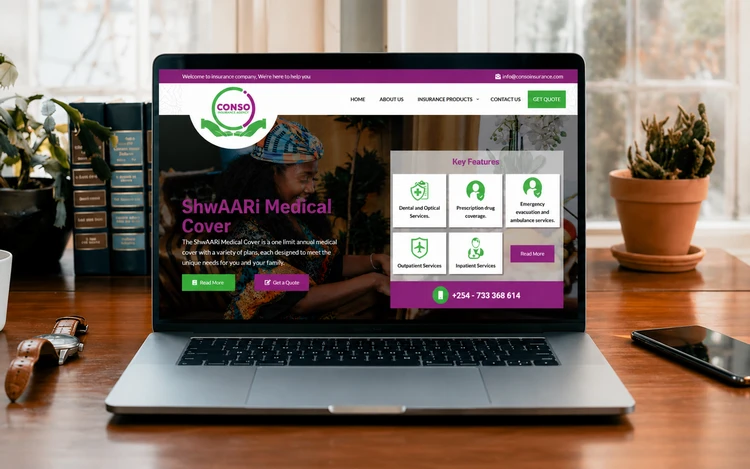
Why Choose Ace Solution Africa
Ace Solution Africa approaches website design as a combination of design, technology, usability, and business strategy. The objective is not simply to create attractive pages but to build websites that help businesses communicate their value, reach customers, generate enquiries, and establish a credible online presence.
Our team works with businesses that need professional websites suited to their industry and audience. This can include small and medium-sized businesses, corporate organizations, hospitality businesses, safari and tourism companies, professional service providers, and other organizations that need a reliable digital platform.
We focus on responsive design, clear content structure, user experience, performance, security, SEO-friendly foundations, and practical calls to action. We also understand that different businesses have different budgets and requirements, so the website should be planned around what is genuinely useful rather than adding complexity without purpose.
If you are comparing the best web designers in Kenya, we encourage you to look at the complete picture: the quality of the work, the development process, communication, support, and how well the proposed solution aligns with your business goals.
Frequently Asked Questions
1. How do I find the best web designers in Kenya?
Start by reviewing relevant portfolios, client testimonials, services, technical capabilities, communication processes, and support options. Compare providers based on the complete scope of work rather than choosing solely on price.
2. How much do the best web designers in Kenya charge?
Prices vary depending on website size, functionality, customization, content, integrations, and support. A simple business website will require a different budget from an e-commerce store, booking system, or custom platform. Request a detailed quotation based on your actual requirements.
3. Should I choose a Nairobi web designer if my business is elsewhere in Kenya?
Not necessarily. A Nairobi-based provider can work with businesses across Kenya, and many agencies work remotely. What matters most is expertise, communication, portfolio, understanding of your target audience, and ability to deliver the required functionality.
4. What should I ask a web designer before hiring them?
Ask about experience, portfolio, development process, timeline, hosting, domain ownership, SEO, mobile responsiveness, security, revisions, maintenance, support, and what happens after launch. Also request a clear breakdown of what is included.
5. Does the best web designer need to specialize in my industry?
Industry experience can be useful because the designer may understand common customer journeys and requirements. However, a strong designer should also be able to research your industry and create a solution based on your specific audience and goals.
6. Why is mobile responsiveness important in Kenya?
Many customers browse and communicate with businesses using smartphones. A responsive website makes it easier for visitors to read information, navigate pages, submit enquiries, call a business, use WhatsApp, or complete purchases from mobile devices.
7. Do web designers also provide SEO?
Some web designers provide basic SEO foundations while others work with dedicated SEO specialists. Ask exactly what is included, such as page structure, metadata, image optimization, indexing configuration, internal linking, and content support.
Conclusion:
Choosing among the best web designers in Kenya requires more than comparing attractive portfolios or looking for the lowest quotation. A successful website should combine strong design with usability, responsive performance, security, SEO-friendly structure, clear calls to action, and functionality that supports the business.
Whether you operate a small business in Nairobi, a professional service company in Kiambu, a hotel on the Kenyan coast, a safari business, an e-commerce store, or an established organization serving customers across Kenya, the right web design partner should understand your objectives and build around them.
If you are ready to strengthen your online presence, Ace Solution Africa can help you plan and develop a professional website aligned with your brand, audience, budget, and business goals. Our team focuses on creating practical online experiences that are designed to support long-term growth.
Get Started Today:
Tel/WhatsApp: +254-721-585-355
Email: sales@acesolutionafrica.com

Table of contents
In the dynamic digital scene, businesses are turning to SEO companies in Kenya to enhance their online presence and drive growth. These expert firms are the unsung heroes behind websites that rank high on search engines and attract organic traffic.
Mastering the Art of SEO
Kenya’s SEO companies are digital experts, weaving strategies that align with ever-evolving search engine algorithms. Their expertise ranges from keyword optimization to technical SEO, ensuring websites are primed for success and achieve 1st page position in search engine.
SEO Companies in Kenya: Local Focus, Global Impact
While the world is their canvas, Kenya’s SEO companies understand the importance of local relevance. They infuse keywords and content that resonate with the Kenyan audience, delivering meaningful connections.
The Science of Conversion
The world of SEO transcends the realm of merely attracting visitors to websites; it delves deep into the art and science of transforming these visitors into valuable customers. In Kenya, SEO companies wield a comprehensive arsenal of techniques known as conversion rate optimization (CRO) to accomplish this feat. This multifaceted approach not only enhances user experiences but also strategically propels sales and generates leads, ultimately fostering business growth.
Nairobi: The Pinnacle of SEO Excellence in Kenya
Nairobi, the vibrant and pulsating capital of Kenya, stands proudly as the epicenter of the nation’s digital landscape. Within its bustling streets and towering buildings, a new realm of business growth is being forged, led by a cohort of distinguished SEO companies. These companies, adorned with knowledge and expertise, are steering local and global businesses toward uncharted territories of success through the seamless integration of cutting-edge SEO strategies.
Your Journey to Digital Triumph Starts Here
Ready to elevate your online presence? Partner with Ace Solution Africa, one of Kenya’s leading SEO company in Kenya. Let us craft your path to digital success.
Contact Us Today:
Tel/WhatsApp: +254-721-585-355
Email: sales@acesolutionafrica.com

Table of contents
Introduction
In the heart of East Africa’s technological hub lies a growing community of skilled professionals: Nairobi web designers. These designers and developers play an important role in shaping how businesses present themselves online, helping companies turn ideas, brands, products, and services into practical digital experiences. As more Kenyan customers search for businesses online before making purchasing decisions, having a professional website has become an important part of building credibility and generating enquiries.
Nairobi is home to businesses across almost every sector, from financial services and technology companies to hospitality, real estate, professional services, retail, healthcare, education, tourism, and creative industries. This diversity means that web design in Nairobi is not simply about producing attractive pages. Different businesses require different website structures, customer journeys, functionality, content, and calls to action.
The best Nairobi web designers combine creative thinking with technical expertise and an understanding of the Kenyan market. They consider how people use smartphones, how customers prefer to communicate, how businesses use channels such as WhatsApp and M-Pesa, and how search engines help potential customers discover local services. A successful website therefore needs to balance design, usability, performance, SEO, security, and business objectives.
This guide explores the role of Nairobi web designers, what makes professional web design effective, why user experience matters, how local market knowledge influences website development, and what businesses should consider when choosing a web design partner in Nairobi.
Bridging Artistry and Innovation
Nairobi web designers are increasingly combining creative artistry with modern technology to create digital experiences that capture attention and encourage action. Good web design involves more than selecting colours and arranging images. It requires an understanding of how visual elements influence perception, how content should be organized, and how visitors move through a website.
A professional designer considers the relationship between branding and usability. Typography should support readability, images should reinforce the message, colours should reflect the brand, and layouts should guide visitors toward important information. Calls to action such as requesting a quote, making a booking, calling a business, sending a WhatsApp message, or purchasing a product should be easy to identify.
Innovation also means knowing when not to overcomplicate a website. A modern website does not need every animation or visual effect available. The strongest designs use technology where it improves the user experience, supports the brand, or helps the business achieve a measurable objective.
The Significance of User-Centric Web Design
One of the defining characteristics of professional Nairobi web designers is a focus on the user. A website exists to serve its visitors, so its design should make it easy for people to find information, understand an offer, and take the next step.
User-centric design affects everything from navigation and page structure to typography, buttons, forms, images, and content. A business may have excellent services, but if visitors cannot quickly understand what it offers or how to contact the company, the website is not doing its job effectively.
For example, a Nairobi law firm may need visitors to find practice areas and contact details quickly. A restaurant may need a menu, location, opening information, and reservation options. A tour operator may need destination pages, safari itineraries, enquiry forms, and compelling photography. Each experience should be designed around the customer’s needs rather than forcing every business into the same template.
A User-Centric Approach Is a Game Changer
At the heart of effective web development lies a simple principle: users should come first. This approach influences decisions that may appear small but can have a significant impact on the overall experience.
Colour palettes need to provide sufficient contrast. Typography needs to remain readable. Buttons need to be easy to identify and tap. Navigation should make sense without requiring visitors to learn how the website works. Information should appear in an order that answers the questions customers are most likely to have.
For Nairobi businesses, this approach is particularly important because many customers interact with websites from mobile devices. A user may discover a company through Google while travelling, during a commute, or from a social media link. If the website is difficult to use on a phone, that potential customer may leave before making an enquiry.
User-centred design therefore connects visual presentation with real business behaviour. The objective is not simply to keep people on a page; it is to help the right visitors complete useful actions.
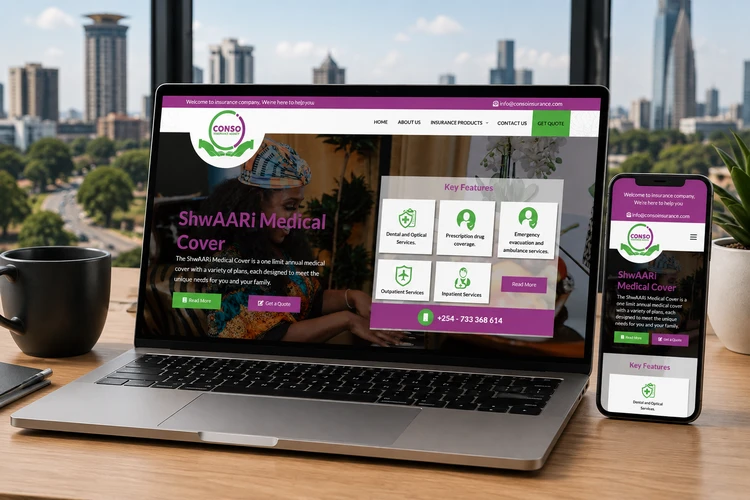
Nairobi’s Digital Renaissance
Nairobi has developed into one of Africa’s notable technology and innovation centres, creating an environment where digital businesses and traditional companies increasingly depend on technology. This growth has influenced the demand for professional websites and digital platforms that can compete locally and internationally.
Nairobi web designers operate within this fast-changing environment. They work with startups, SMEs, established organizations, entrepreneurs, hospitality businesses, professional firms, and companies serving customers outside Kenya. This creates opportunities for designers to combine local understanding with international web standards.
The city’s digital ecosystem also means that businesses are exposed to competitors with increasingly polished online presences. A company may be competing not only with another business in its neighbourhood but also with providers across Kenya and international companies offering similar services. A professional website can help establish credibility and clearly communicate why a business deserves consideration.
Local Kenyan Context in Web Design
A website designed for Nairobi customers should feel relevant to its audience. This does not mean filling pages with unnecessary references to Nairobi. Instead, local context should appear naturally where it helps visitors understand the business.
Location information can be important for businesses with physical premises. Clear addresses, Google Maps, service areas, phone numbers, WhatsApp contact options, and opening hours can make it easier for customers to take action. Businesses serving multiple areas can also explain their coverage without creating thin or repetitive pages.
Payment and communication preferences can also influence functionality. An e-commerce company may want M-Pesa and card payment options. A service business may generate a significant number of enquiries through WhatsApp. A hotel may need direct booking or reservation functionality. A web designer who understands these requirements can help create a more practical customer journey.
Mobile-First Experiences for Nairobi Customers
Mobile responsiveness should be a core consideration when choosing Nairobi web designers. A website can look excellent on a desktop and still provide a poor experience on a smartphone. Since many customers discover and interact with businesses through mobile devices, the mobile experience should be designed deliberately rather than treated as an afterthought.
Mobile-friendly design includes readable text, simple menus, appropriately sized buttons, optimized images, fast-loading pages, and forms that are comfortable to complete on a small screen. Important actions such as calling, sending a WhatsApp message, requesting a quote, or booking a service should remain easy to access.
Designers should test websites across different screen sizes and consider real-world conditions rather than relying only on a desktop preview. A mobile user may have a slower connection, a smaller screen, or limited time to find information. Good design accommodates these circumstances.
SEO and Nairobi Web Design
A professionally designed website should also provide a strong foundation for search engine visibility. Nairobi web designers do not necessarily need to perform every SEO service, but they should understand how design and development decisions affect search performance.
A search-friendly website generally needs clear page structures, logical headings, descriptive URLs, mobile responsiveness, optimized images, crawlable content, appropriate metadata, and a sensible internal linking structure. Pages should also provide genuine value to visitors rather than simply repeating keywords.
For a business targeting searches related to Nairobi, local SEO can be particularly useful. Service pages can explain what the business offers, while location information can help search engines and users understand where the company operates. A strong website structure makes it easier to build additional content and internal links over time.
SEO should therefore be considered during planning rather than added as an afterthought. Correcting structural problems after launch can be more expensive and disruptive than building the foundation properly from the beginning.
Performance, Speed and Technical Quality
Visual design is only one part of a successful website. Performance also affects how visitors experience a business online. Slow pages can create frustration, particularly for users accessing a website on mobile connections.
Nairobi web designers should consider image optimization, efficient code, caching, hosting, scripts, plugins, database performance, and other technical factors that can influence page speed. High-quality images are useful for branding, but they should be prepared appropriately for the web rather than uploaded in unnecessarily large file sizes.
Technical quality also includes reliable forms, working links, proper error handling, secure connections, backups, and appropriate software maintenance. A professional website should be treated as a business asset that needs ongoing care rather than a one-time digital brochure.
Security and Website Maintenance
Security is an important consideration for any business website. Forms, user accounts, payment systems, content management systems, plugins, and integrations can introduce risks if they are not properly maintained.
A responsible web design partner should explain how the website will be protected and maintained after launch. Depending on the project, this can include SSL, regular updates, backups, access controls, spam protection, monitoring, and technical support.
Maintenance is also important for keeping the website functioning properly. Content may need to be updated, plugins may require compatibility checks, and new business requirements may emerge. A Nairobi business that grows over time should be able to update its website rather than starting from scratch whenever it introduces a new service.
Build a Stronger Digital Presence
Ready to Build a Website That Works for Your Business?
Whether you need a new website or want to improve your existing online presence, Ace Solution Africa can help you create a professional, responsive and business-focused digital experience.
Collaboration for Unparalleled Results
Strong collaboration between a business and its web designers can significantly improve the final result. The designer understands digital strategy, user experience, design, and technology, while the business owner understands the customers, services, industry, and competitive environment.
The project should therefore begin with questions about business goals. Is the website intended to generate leads, sell products, receive bookings, build credibility, attract job applicants, provide information, or support an existing sales process? The answer influences the website structure and functionality.
Good collaboration also involves content. Businesses should provide accurate information, brand assets, photographs, product details, testimonials, and other materials on time. Designers can then organize and present those materials in a way that supports the customer journey.
Clear communication about timelines, revisions, approvals, responsibilities, and deliverables also reduces misunderstandings. The strongest websites are usually the result of a structured partnership rather than a process where the designer works in isolation.
Designing Websites That Support Business Growth
A website should be capable of supporting a business as it develops. A small company may initially need a few service pages and a contact form, but later require e-commerce, booking functionality, additional locations, a blog, customer accounts, or integrations.
Nairobi web designers should therefore consider scalability when planning a website. A clean content structure and sensible technical foundation can make future improvements easier. Businesses should avoid both extremes: building an unnecessarily complicated system before it is needed or choosing a platform that cannot support future requirements.
Growth-focused design also means thinking about conversion. The website should guide visitors from awareness to understanding and then to action. Calls to action should appear at appropriate points, service pages should answer customer questions, and trust elements such as testimonials, case studies, certifications, or clear company information can help reduce uncertainty.
How to Choose Nairobi Web Designers
Businesses looking for Nairobi web designers should evaluate more than the appearance of a provider’s own website. Start by reviewing relevant portfolio work and visiting completed websites where possible. Test them on both desktop and mobile devices.
Ask what services are included in the project. Does the provider handle design and development? Is content support available? Is basic SEO included? Who provides hosting? Who owns the domain and website files? What happens after launch? Are maintenance and security services available?
Communication is equally important. A professional provider should explain the process, timelines, responsibilities, revision policy, and deliverables clearly. Avoid choosing a provider based only on vague promises or an unusually low quotation.
The right choice depends on your specific requirements. A small business website may not need the same team or budget as an e-commerce platform or custom web application. The goal is to find a provider whose capabilities match the project’s needs.
Why Professional Web Design Matters for Nairobi Businesses
Competition in Nairobi can be intense across many sectors. Customers can compare businesses quickly through Google, social media, review platforms, and company websites. A professional website helps a business control the information it presents and gives potential customers a reliable place to learn more.
A strong website can reinforce credibility by clearly communicating services, experience, locations, contact details, customer reviews, and other trust signals. It can also reduce friction by allowing visitors to submit enquiries, make bookings, request quotations, or purchase products without unnecessary steps.
Professional web design is therefore not simply an aesthetic investment. It can support marketing, sales, customer service, brand positioning, and business operations. The exact value will depend on the business model, but the website should always be designed around a clear purpose.
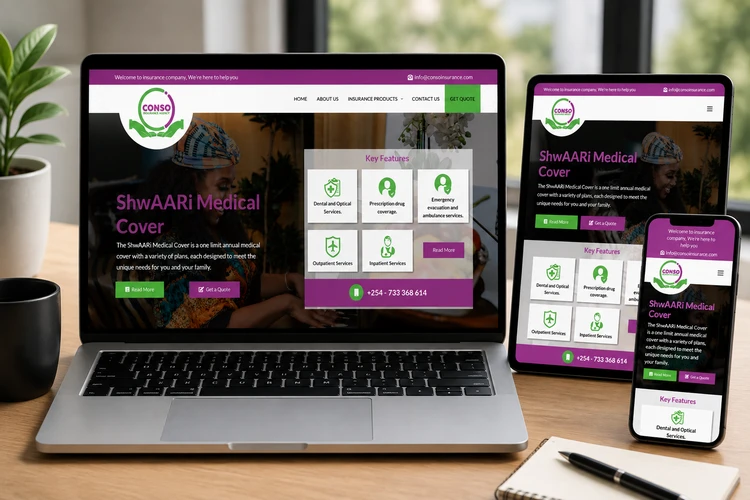
Why Choose Ace Solution Africa
Ace Solution Africa brings together design, development, usability, performance, and SEO-friendly thinking to create websites for businesses that want a stronger online presence. Our approach is focused on understanding the business first and then building a digital experience around its customers and objectives.
We work with Kenyan businesses across different sectors, including small and medium-sized businesses, professional services, hospitality, tourism and safari companies, and organizations that need a dependable online platform. Each project can have different requirements, so the website is planned around the functionality and content that genuinely support the business.
Our Nairobi web designers focus on responsive layouts, clear navigation, practical calls to action, strong content structure, performance, security, and future scalability. We also recognize the importance of local communication channels and the needs of businesses serving customers in Nairobi and across Kenya.
If you are comparing Nairobi web designers, look at the complete value offered: design quality, technical expertise, communication, support, SEO readiness, and the ability to build a website that contributes to your business goals.
Frequently Asked Questions
1. How do I choose the right Nairobi web designers?
Review portfolios, testimonials, technical capabilities, communication processes, timelines, support, and the full scope of work. Choose a provider whose experience matches your website requirements rather than choosing only on price.
2. How much do Nairobi web designers charge?
The cost varies according to the number of pages, design complexity, functionality, integrations, content, SEO requirements, and ongoing support. A simple business website will have different requirements from an e-commerce platform or custom web application.
3. Why should I hire Nairobi web designers for a Nairobi business?
Local designers may understand the Kenyan market, customer behaviour, communication preferences, local SEO, payment options, and business environment. However, the most important factors remain expertise, quality, communication, and suitability for your project.
4. Can Nairobi web designers build e-commerce websites?
Yes. Professional web design teams can build online stores with product catalogues, shopping carts, payment gateways, order management, and other features depending on the project.
5. Can a Nairobi website integrate M-Pesa?
M-Pesa integration can be included where the website and business requirements support it. The exact implementation and cost depend on the payment workflow and other systems involved.
6. Do Nairobi web designers provide SEO?
Some provide SEO foundations or work with SEO specialists. Ask what is included, such as headings, URLs, metadata, mobile responsiveness, image optimization, indexing setup, and content structure.
7. Why is mobile responsiveness important?
Many customers access websites through smartphones. Responsive design ensures that navigation, content, forms, images, and calls to action remain usable across different screen sizes.
8. What should I ask before hiring a web designer?
Ask about portfolio experience, process, technology, content requirements, hosting, domain ownership, SEO, security, revisions, timelines, maintenance, support, and exactly what the quotation includes.
Conclusion:
Nairobi web designers are helping businesses adapt to an increasingly digital marketplace by combining creativity, technology, local understanding, and user-focused thinking. A professional website should do more than look good; it should make information accessible, communicate trust, support customer actions, and contribute to measurable business objectives.
Whether you operate a startup in Nairobi, a professional service firm, an e-commerce business, a hotel, a restaurant, a safari company, or an established organization, the right website can become an important part of your digital strategy. Choosing the right design partner means looking at the full picture: design quality, technical capability, mobile performance, SEO readiness, security, communication, and long-term support.
Ready to transform your online presence? Partner with Ace Solution Africa. Our Nairobi web designers can help turn your ideas into a practical, professional digital experience designed around your brand, audience, and business goals.
Get Started Today:
Tel/WhatsApp: +254-721-585-355
Email: sales@acesolutionafrica.com

Table of contents
The significance of SEO services in Kenya cannot be overstated. As businesses strive to thrive in the ever-evolving online medium, the power of effective Search Engine Optimization (SEO) becomes a game-changer. But exactly what does SEO entail, and how does it impact your business’s visibility and success?
Navigating the SEO Services in Kenya Landscape
SEO services in Kenya encompass a suite of strategies designed to enhance a website’s visibility on search engines like Google. By leveraging relevant keywords, optimizing on-page content, and fine-tuning technical aspects, SEO experts ensure that your website ranks higher in google search results page (SERP). This increased visibility translates into heightened organic traffic, a valuable asset for any business aiming to stand out in the digital crowd.
The Bridge to Online Visibility
Imagine your website as a gleaming gem hidden amidst the vast expanse of the internet. SEO services are the bridge that guides users to discover this gem. Research reveals that the majority of users rarely venture beyond the first page of search results. Effective SEO ensures your website secures a prime spot on that coveted first page, exponentially increasing the likelihood of attracting potential customers.
Local Relevance and Global Impact
For local businesses in Kenya, optimizing for local searches is important. Through local SEO tactics, your business can seize the attention of potential customers right in your vicinity. From Nairobi to Mombasa, effectively optimized content and listings will ensure that your business shines in local search results. This focus on local relevance complements a broader SEO strategy that extends your brand’s reach globally.
Tailoring Strategies for Success
The realm of SEO services is not a one-size-fits-all proposition. Successful SEO strategies are tailor-made to suit each business’s unique needs and goals. This customized approach includes in-depth keyword research, competitor analysis, and an understanding of your target audience. A well-crafted SEO strategy serves as a digital compass, guiding your business towards sustained online success.
Unleash the Power of SEO with Us
At Ace Solution Africa, we specialize in delivering SEO services that amplify your online presence. Our expert team understands the intricacies of the digital landscape, utilizing proven techniques to ensure your website climbs the search engine rankings. Take the first step towards enhancing your online visibility and driving business growth.
Contact Us Today:
Tel/WhatsApp: +254-721-585-355
Email: sales@acesolutionafrica.com

Table of contents
Introduction
In East Africa’s rapidly developing digital economy, Nairobi has emerged as a major centre of technology, entrepreneurship, and digital innovation. The city is home to businesses ranging from technology startups and financial services companies to hospitality brands, professional firms, retailers, tourism operators, and growing small and medium-sized enterprises. Behind many of these businesses’ digital experiences are web designers Nairobi who combine creativity, technology, and an understanding of the market to build websites for local and international audiences.
The rise of web design in Nairobi reflects the broader growth of Kenya’s digital economy. Businesses increasingly depend on websites to attract customers, communicate their value, generate enquiries, sell products, receive bookings, and establish credibility. As competition increases, simply having a website is no longer enough. Companies need websites that are fast, responsive, easy to use, secure, search-friendly, and designed around real customer needs.
Nairobi’s advantage comes from several factors. The city has a strong technology ecosystem, a growing pool of digital professionals, a diverse business community, a culture of entrepreneurship, and exposure to both local and international markets. These conditions create an environment where web designers can experiment, collaborate, learn, and build solutions that respond to changing customer expectations.
This article explores why web designers Nairobi continue to play an important role in East Africa’s digital landscape, from their innovative mindset and technical skills to cultural diversity, entrepreneurial thinking, collaboration, mobile-first design, and understanding of Kenyan businesses.
Innovative Mindset
Nairobi’s web designers are driven by a mindset that encourages experimentation and continuous improvement. Rather than simply copying what other websites are doing, strong designers look for ways to solve customer problems through better structure, clearer communication, stronger visual experiences, and useful functionality.
Innovation in web design does not always mean using the newest visual effect or technology. Sometimes innovation means finding a simpler way for a customer to complete a task. A well-designed enquiry form, an intuitive mobile menu, a clearer service page, a faster checkout process, or an easier booking experience can have a greater business impact than a complicated animation.
The environment in Nairobi encourages this practical approach because businesses often need digital solutions that work within real-world constraints. A company may need to serve customers using smartphones, communicate through WhatsApp, accept M-Pesa payments, target local search terms, and compete with businesses in other cities at the same time. Web designers who understand these needs can turn them into practical digital experiences.
Web Designers Nairobi: Technical Prowess
Technical expertise is another reason Nairobi has developed a strong web design ecosystem. Professional web designers need to understand more than visual layouts. They increasingly work with content management systems, responsive frameworks, JavaScript functionality, APIs, analytics, security tools, performance optimization, hosting environments, and search-friendly website structures.
Responsive design is especially important because users access websites from a wide range of devices. A website should work properly on smartphones, tablets, laptops, and desktop computers. Navigation, typography, images, buttons, forms, and calls to action all need to adapt appropriately.
Performance is also part of technical quality. Large images, unnecessary scripts, excessive plugins, or poor hosting configuration can slow down a website. A skilled web designer considers the relationship between appearance and performance so that a website can remain visually engaging without becoming unnecessarily heavy.
For Kenyan businesses, technical capability can also include integrating local requirements such as M-Pesa, WhatsApp communication, booking systems, customer forms, online stores, and other business tools. This ability to combine international web standards with local requirements is a valuable advantage.
A Strong Technology Ecosystem in Nairobi
Nairobi’s wider technology ecosystem provides an environment where digital professionals can learn from one another and experiment with new ideas. Technology companies, startups, entrepreneurs, developers, marketers, designers, and other digital specialists operate within the same business environment, creating opportunities for knowledge sharing and collaboration.
This ecosystem matters because web design rarely exists in isolation. A website may form part of a wider digital strategy involving search engine optimization, social media, paid advertising, content marketing, email campaigns, analytics, customer relationship management, and online payments.
A designer who understands this broader ecosystem can build websites that integrate more effectively with other business activities. Instead of treating the website as an isolated brochure, the project can be planned as one component of a company’s wider digital presence.
Build a Better Digital Presence
Ready to Build a Website That Works for Your Business?
Work with a Nairobi web design team that understands your business, audience and digital goals.
Cultural Diversity
Nairobi’s cultural diversity has a significant influence on its digital environment. The city brings together people from different communities, backgrounds, industries, and countries, creating a naturally varied audience for digital products and services.
For web designers, this diversity can encourage greater attention to language, imagery, communication styles, accessibility, and user expectations. A website aimed at a Kenyan audience may need a different tone and visual approach from one targeting international customers, even when the underlying business is the same.
Tourism provides a good example. A Kenyan safari company may serve local travellers as well as visitors from Europe, North America, Asia, and other African countries. Its website therefore needs to communicate local authenticity while also providing clear information that international visitors expect, such as itineraries, accommodation details, pricing guidance, travel information, enquiry options, and trust signals.
The ability to design for different audiences helps Nairobi’s web designers develop experiences that can operate across borders while retaining local relevance.
Web Designers Nairobi: Entrepreneurial Spirit
Entrepreneurship is deeply connected to Nairobi’s technology and business culture. Many businesses in the city are built around solving problems, identifying opportunities, and adapting quickly. This environment influences web designers as well.
A business-focused web designer understands that the purpose of a website is not merely to look attractive. The website should support a commercial objective. Depending on the business, that may mean generating leads, selling products, receiving bookings, attracting investors, building authority, recruiting employees, or providing information to customers.
This mindset changes how designers approach projects. Instead of asking only what the homepage should look like, they ask who the target customers are, what those customers need to know, what objections they may have, and what action the business wants them to take.
For a Nairobi-based professional service firm, that may mean emphasizing expertise and enquiry forms. For an e-commerce business, it may mean simplifying product discovery and checkout. For a hotel, it may mean making room information and booking options highly visible.

Designing for Kenyan Business Needs
One of Nairobi’s strengths is the ability to create websites that respond to practical Kenyan business requirements. Businesses may have different expectations from companies operating in other markets, particularly around communication, payments, logistics, and customer behaviour.
WhatsApp can be an important communication channel for businesses that want customers to ask questions or request quotations quickly. M-Pesa can be important for online payments and transactions. Location information can also matter for businesses serving customers in specific parts of Nairobi or elsewhere in Kenya.
These requirements can influence website structure. Contact information should be easy to find, mobile users should not struggle with forms, payment journeys should be clear, and service information should answer common customer questions.
The best approach is not to add local features simply because they are available. Instead, designers should identify which tools customers actually use and integrate them in ways that make the customer journey easier.
Mobile-First Web Experiences
Mobile-first thinking is particularly important for web designers Nairobi because many Kenyan consumers access digital services through smartphones. Designing for mobile first encourages teams to prioritize the information and actions that matter most.
A mobile-first website should have a clear navigation structure, readable text, properly sized buttons, optimized images, accessible forms, and fast-loading pages. A visitor should be able to call the business, send a WhatsApp enquiry, view a service, request a quotation, or make a booking without fighting the interface.
Mobile design should also consider real-world connectivity. Heavy pages can create frustrating experiences for users on slower or less reliable connections. Performance optimization therefore becomes part of user experience rather than merely a technical exercise.
A strong mobile experience can help businesses reach customers beyond Nairobi as well, including users in other Kenyan counties and across East Africa.
Accessibility and Inclusive Web Design
Modern web design should also consider accessibility. A website should be usable by as many people as reasonably possible, including visitors who may have visual, motor, hearing, cognitive, or other accessibility needs.
Accessibility can involve readable typography, sufficient colour contrast, descriptive image alternatives, logical headings, keyboard-friendly interactions, clear forms, and understandable error messages. These practices can improve usability for everyone, not only users with disabilities.
For Nairobi businesses serving broad audiences, accessible design can strengthen the quality of the overall digital experience. It also encourages designers to focus on clarity and usability rather than relying on visual effects alone.
Web designers who incorporate accessibility into their process demonstrate a more mature understanding of digital design because they recognize that a website should serve people with different abilities and circumstances.
SEO and Digital Visibility
A website cannot generate much business value if the intended audience cannot find it. Search engine optimization therefore plays an important role in modern web design. Web designers Nairobi who understand SEO can create stronger foundations for businesses that want to attract organic traffic.
Technical SEO considerations can include logical page structures, descriptive URLs, proper headings, mobile responsiveness, optimized images, crawlable content, internal linking, metadata, and performance. Content should also be organized around genuine customer questions and search intent.
For a Nairobi business, local SEO can be particularly useful. A company may want to appear when potential customers search for a service in Nairobi or in a particular neighbourhood. Clear service information, location details, relevant pages, and consistent business information can support that objective.
SEO should be planned from the beginning because changing a website’s architecture after launch can be more difficult than creating a search-friendly structure during development.

Performance, Security and Reliability
Digital innovation must also be supported by reliability. A visually impressive website that frequently breaks, loads slowly, or exposes users to security problems does not provide a strong business experience.
Web designers and developers need to consider website security, SSL certificates, secure forms, backups, software updates, access controls, spam prevention, and appropriate maintenance. E-commerce and booking websites may require additional security considerations because they handle customer information and transactions.
Performance is equally important. Image compression, caching, efficient scripts, suitable hosting, and careful plugin management can help websites load more efficiently. Businesses should also have a plan for ongoing maintenance rather than assuming that a website will operate perfectly forever without updates.
A mature web design process therefore combines creativity with technical responsibility.
Collaboration and the Nairobi Digital Ecosystem
Nairobi’s web design community benefits from collaboration between different digital disciplines. Designers can work with developers, SEO professionals, copywriters, photographers, marketers, social media specialists, branding teams, and business consultants.
Each discipline contributes something different. A designer can create the visual and user experience direction, while a developer turns the design into a functioning website. An SEO specialist can help structure content for search visibility, while a copywriter can communicate the company’s value clearly. A marketer can then connect the website with campaigns that bring targeted visitors.
This collaborative model can produce stronger outcomes than expecting one person to be an expert in every aspect of digital marketing. For businesses, it also creates the possibility of building a website that works as part of a wider marketing system.
Designing for East African and Global Audiences
Nairobi’s position as an East African business centre gives web designers opportunities to work on projects that extend beyond Kenya. A website built in Nairobi may target customers in Uganda, Tanzania, Rwanda, Ethiopia, other African markets, or international audiences.
Designing for multiple markets requires an understanding of audience differences. Currency, language, cultural references, delivery expectations, payment methods, and customer behaviour may vary between countries.
At the same time, the fundamental principles of good web design remain consistent: clear communication, intuitive navigation, responsive performance, strong content, credibility, accessibility, security, and useful calls to action.
Nairobi’s ability to combine local understanding with international digital standards gives businesses an opportunity to build websites that can grow beyond the Kenyan market.
How Businesses Can Evaluate Web Designers Nairobi
Businesses looking for web designers Nairobi should assess providers using more than portfolio screenshots. Visit completed websites and test them on both desktop and mobile devices. Check navigation, loading speed, forms, calls to action, content structure, and overall usability.
Ask the designer to explain their process. Find out how they gather requirements, plan the website, handle content, manage revisions, test the site, and support it after launch. Request a clear quotation showing what is included and what may cost extra.
It is also important to understand who owns the domain, hosting account, website files, and administrator access. Businesses should avoid arrangements that leave them unable to control their own digital assets.
Finally, compare providers based on value rather than price alone. The right designer should be able to explain how the proposed website will support your specific business goals.
Why Choose Ace Solution Africa
Ace Solution Africa combines web design, development, usability, performance, and SEO-friendly thinking to help businesses build stronger digital presences. Our approach begins with understanding the business, its audience, and the purpose of the website before deciding how the site should look and function.
We work with Kenyan businesses across different industries, including professional services, hospitality, tourism and safari businesses, SMEs, corporate organizations, and other companies that need reliable websites. We understand that a Nairobi business may have different requirements from a business serving customers elsewhere, so projects are planned around practical objectives.
Our team focuses on responsive design, clear content structures, practical calls to action, performance, security, and scalability. Where appropriate, websites can also support local communication and payment preferences such as WhatsApp and M-Pesa.
If you are searching for web designers Nairobi, look beyond visual appearance. Consider the provider’s process, technical capabilities, communication, SEO understanding, support, and ability to create a website that contributes to long-term business growth.
Frequently Asked Questions
1. Why are web designers Nairobi considered innovative?
Nairobi’s technology ecosystem, entrepreneurial culture, diverse business community, and exposure to local and international markets create an environment where designers can experiment, collaborate, and develop practical digital solutions.
2. What should I look for when hiring web designers Nairobi?
Review portfolios, mobile performance, technical capabilities, SEO understanding, communication, project processes, security practices, support, and the complete scope of work. Choose a provider based on suitability and value rather than price alone.
3. Can web designers Nairobi build websites for businesses outside Kenya?
Yes. A Nairobi-based design team can create websites for clients across East Africa and international markets. The key is understanding the target audience, market requirements, content, payment expectations, and business goals.
4. Can Nairobi web designers integrate M-Pesa?
M-Pesa integration may be possible depending on the website and business requirements. The implementation depends on the payment workflow, platform, and other systems that need to connect to the website.
5. Why is mobile-first design important in Kenya?
Many users access websites through smartphones. Mobile-first design prioritizes readable content, simple navigation, fast performance, usable forms, and accessible calls to action on smaller screens.
6. Does web design include SEO?
Some providers include basic SEO foundations while others offer SEO as a separate service. Ask specifically about headings, URLs, metadata, image optimization, indexing, internal links, performance, and content structure.
7. How much does it cost to hire web designers Nairobi?
Costs vary depending on website size, design complexity, functionality, integrations, content, SEO requirements, and support. Request a detailed quotation based on your actual requirements rather than relying on a generic price.
8. Should I choose a freelancer or an agency?
Either can work depending on the project. A freelancer may be suitable for a smaller website, while an agency can be useful for projects requiring several specialized skills, ongoing support, or more complex functionality.
Conclusion:
Nairobi’s position as a leading technology and business centre has created a strong environment for web design innovation. Web designers Nairobi combine technical expertise, creative thinking, entrepreneurial awareness, cultural diversity, and collaboration to create digital experiences for Kenyan, East African, and international audiences.
For businesses, the important lesson is that good web design is about more than appearance. A successful website should be responsive, fast, secure, accessible, search-friendly, easy to navigate, and aligned with clear business objectives. It should also reflect the needs and behaviour of the people it is designed to serve.
Whether you are a Nairobi startup, an established Kenyan company, an e-commerce business, a professional service provider, a hotel, or a safari operator, the right web design partner can help turn your digital presence into a stronger business asset.
Ready to take your digital presence to the next level? Contact Ace Solution Africa and let our team help you create a professional website designed around your brand, audience, and growth objectives.
Get Started Today:
Tel/WhatsApp: +254-721-585-355
Email: sales@acesolutionafrica.com

Table of contents
Introduction
Web design services in Kenya are part of a much bigger digital transformation. Beyond helping businesses establish an online presence, the growth of web design and development is creating opportunities for young people to acquire practical digital skills, find employment, serve clients remotely, and build their own businesses. As Kenya continues to expand its digital economy, these skills can contribute to wider economic participation and create new pathways toward financial independence.
Kenya has a large and youthful population, while businesses increasingly depend on websites, e-commerce platforms, digital marketing, online booking systems, and other internet-based services. This creates demand for people who can design, develop, maintain, optimize, and manage digital products. For young people who may face limited access to traditional employment opportunities, digital skills can open additional routes into the labour market.
The connection between web design and poverty alleviation should, however, be understood realistically. Learning web design does not automatically guarantee employment or financial success. Training needs to be combined with practical experience, communication skills, business knowledge, reliable internet access, mentorship, portfolio development, and access to clients or employers. When these elements come together, web design can become a valuable income-generating skill.
This article explores how web design services in Kenya connect with youth empowerment, digital training, entrepreneurship, remote work, and economic development. It also examines examples associated with organizations such as NairoBits and Moringa School, while considering how businesses and the wider technology ecosystem can contribute to sustainable digital opportunities.
Web Design Services in Kenya and Youth Empowerment
Web design can provide young people with a practical entry point into the technology industry. Unlike some highly specialized technical careers, the fundamentals of web design can be learned progressively, beginning with HTML, CSS, design principles, content management systems, responsive layouts, and basic user experience.
As learners gain experience, they can move into more advanced areas such as JavaScript, WordPress development, e-commerce, search engine optimization, UI/UX design, website maintenance, and custom web development. This creates multiple possible career paths rather than a single occupation.
For young Kenyans, the ability to build a portfolio can be particularly important. A portfolio gives a learner evidence of what they can do even when they do not yet have extensive formal employment experience. A simple business website, online store, landing page, school website, or personal project can demonstrate practical ability to potential employers or clients.
Training should therefore focus not only on theory but also on building real projects. Practical experience helps young people understand deadlines, client communication, revisions, content requirements, troubleshooting, and the expectations of professional web design work.
The Growth of Kenya’s Digital Economy
Kenya’s digital economy has created demand for a broad range of online services. Businesses increasingly use websites as part of marketing, sales, customer service, recruitment, bookings, payments, and brand communication.
Small businesses need websites that explain their services and generate enquiries. Hotels and tourism companies need online booking and information systems. Retailers may require e-commerce stores. Professional firms need platforms that communicate expertise and credibility. Schools, NGOs, real estate companies, restaurants, and creative businesses all have different digital requirements.
This growing demand creates opportunities for web designers and developers. It also creates opportunities for related professionals, including copywriters, graphic designers, photographers, SEO specialists, digital marketers, social media managers, project managers, and technical support providers.
The result is an ecosystem in which web design services in Kenya can contribute indirectly to employment beyond the individual who writes the code or creates the layout. A successful digital project can involve several skills and create work for multiple professionals.
Ready to Build a Stronger Digital Presence?
Whether you need a new website, a redesign, or a professional digital platform for your business, Ace Solution Africa can help you create a website designed around your business goals.
NairoBits and Digital Skills Development
NairoBits has been associated with digital skills development and youth empowerment in Nairobi, particularly through initiatives aimed at providing disadvantaged young people with technology-related skills. Its work illustrates how digital training can be connected with broader social and economic opportunities.
Programs that introduce young people to ICT can help learners discover abilities they may not have previously considered. Web design can be particularly useful because it combines creative and technical skills. A learner interested in art can explore visual design, while someone interested in technology can move deeper into development.
The broader lesson is that digital education can become more meaningful when it is connected to practical opportunities. Training should ideally help participants develop portfolios, professional behaviour, communication skills, entrepreneurship awareness, and an understanding of how to find work or clients.
The impact of organizations such as NairoBits should therefore be viewed within the wider context of digital inclusion: providing people with skills that can help them participate more actively in the modern economy.
Moringa School and Technology Career Pathways
Moringa School has also become known in Kenya for technology-focused education and career development. Its model highlights another important part of digital skills development: preparing learners for careers that require practical technical capabilities.
Web development sits within a larger technology landscape that includes software engineering, data, product development, and other digital disciplines. Training institutions can help young people understand these career paths and develop the foundations needed to progress.
For web design learners, the lesson is that education should not stop at learning how to create a page. Professional success requires problem-solving, teamwork, communication, project management, version control where appropriate, client interaction, and continuous learning.
The technology industry changes quickly. Tools and platforms that are popular today may change in a few years. Young professionals who develop strong fundamentals and a habit of learning can adapt more effectively as the industry evolves.
Web Design Skills and Employment Opportunities
Web design skills can lead to different forms of employment. Some young professionals may join agencies, technology companies, marketing firms, in-house digital teams, or organizations that manage their own websites.
Others may work as freelancers. Freelancing can allow a skilled designer to serve clients from different parts of Kenya or from international markets. However, freelancing should not be presented as effortless. It requires the ability to market services, communicate with clients, prepare proposals, manage payments, meet deadlines, handle revisions, and maintain a professional portfolio.
Employment opportunities can also extend beyond pure design. A person who starts with web design may later specialize in UI/UX, front-end development, WordPress development, SEO, e-commerce, content management, or digital project coordination.
This flexibility is one of the strengths of digital skills. A young person can begin with a basic skill and progressively develop a broader professional profile.
Remote Work and Global Opportunities
One of the major attractions of web design is the possibility of working with clients beyond one’s immediate location. A Kenyan web designer does not necessarily need to live in the same city as the client. With appropriate skills, communication tools, payment arrangements, and a reliable internet connection, work can potentially be delivered across Kenya and internationally.
Remote work can create opportunities for young people who may not have access to large numbers of local employers. A designer in Nairobi, Kisumu, Mombasa, Nakuru, Eldoret, or another Kenyan location can build a portfolio and seek opportunities beyond their immediate surroundings.
International work also introduces higher expectations. Clients may expect professional communication, strong documentation, reliable delivery, quality assurance, and familiarity with international design standards. Young professionals therefore need to develop soft skills alongside technical ability.
Remote work is not a guaranteed solution to unemployment, but it can expand the geographical reach of a skilled worker and create additional possibilities for earning income.
Web Design as a Path to Digital Entrepreneurship
Not every young person who learns web design will want a conventional job. Some may use their skills to establish a small digital business.
A young designer can begin by serving local SMEs that need websites, landing pages, online stores, maintenance, or redesigns. Over time, the business can grow into a small agency employing other designers, developers, writers, or marketers.
Entrepreneurship also teaches skills that technical training alone may not provide. A freelancer or agency owner must understand pricing, proposals, contracts, customer service, marketing, cash flow, project management, and business development.
For Kenya’s economy, successful digital businesses can contribute in several ways. They can create jobs, support other businesses with digital services, pay taxes, purchase services from other suppliers, and mentor new professionals.

The Role of Businesses in Youth Digital Employment
Businesses that purchase web design services in Kenya can also play a role in developing the next generation of digital professionals. Agencies and established companies can create internships, apprenticeships, junior positions, mentorship opportunities, and structured training.
Experienced professionals can help young people move from classroom knowledge to professional practice. This transition is often where learners discover the difference between creating a project for themselves and delivering work for a paying client.
Businesses can also contribute by giving junior professionals manageable responsibilities while providing supervision and feedback. A young designer who receives constructive guidance can develop confidence and professional habits more quickly.
The private sector therefore has an important role alongside schools and training institutions. Education creates skills, while professional environments help turn those skills into experience.
The Importance of Practical Training
Effective web design education should be practical. A learner may understand HTML tags or design principles but still struggle to build a complete website for a real customer.
Practical projects introduce important realities. Clients may change requirements. Content may arrive late. Images may need optimization. A website may look good on one screen but require adjustments on another. Forms may fail. A page may load too slowly. Search engines may need additional technical configuration.
These experiences build problem-solving ability. Training programs can improve employability by incorporating realistic briefs, deadlines, presentations, teamwork, portfolio development, and client-style feedback.
For young people entering the industry, practical experience can be as valuable as certificates. Employers and clients want evidence that a person can complete useful work, solve problems, communicate effectively, and deliver consistently.
Digital Inclusion and Access to Opportunity
Digital employment opportunities are only meaningful when young people can access the tools required to participate. Reliable internet connectivity, suitable devices, electricity, training facilities, and affordable education can all influence whether someone can develop digital skills.
This is why digital inclusion is closely connected to youth employment. A talented learner who cannot consistently access a computer or internet connection may find it harder to practice than someone with better resources.
Organizations, schools, businesses, community initiatives, and government programs can contribute by expanding access to digital learning environments. Shared computer labs, affordable training, mentorship, internet access, and practical community programs can reduce some of the barriers faced by aspiring digital professionals.
The goal should not simply be to teach more people technology. It should be to create pathways where skills can realistically lead to further education, employment, entrepreneurship, or income-generating opportunities.
Women and Broader Participation in the Digital Economy
Youth empowerment should also encourage broad participation in the digital economy. Young women and other groups that may face barriers to technology careers should have opportunities to access training, mentorship, professional networks, and employment.
Web design can offer an interesting combination of technical and creative work, allowing people with different interests to find areas that suit their strengths. Someone may specialize in design, while another person focuses on development, content, SEO, project management, or client relationships.
A more inclusive technology workforce can also produce digital products that reflect a wider range of experiences and needs. Businesses benefit when their teams can understand and design for diverse customers.
Creating opportunities therefore requires more than training numbers. It requires supportive environments, fair recruitment, mentorship, practical experience, and pathways into sustainable careers.
Web Design Services in Kenya and Poverty Alleviation
The relationship between web design and poverty alleviation should be viewed as part of a broader economic chain. A person who acquires valuable skills can potentially obtain employment, freelance work, or build a business. Income from that work can support household needs and contribute to local economic activity.
However, sustainable poverty reduction requires more than individual training. Young people need access to opportunities where their skills can generate income. They also need professional networks, markets, mentorship, reliable infrastructure, and opportunities to continue learning.
For this reason, digital skills programs are strongest when they connect training with employment pathways or entrepreneurship support. A learner who finishes a course and then has no opportunity to practice may struggle to convert knowledge into income.
Web design can contribute to poverty alleviation when it becomes part of a complete ecosystem connecting education, skills, employment, entrepreneurship, business demand, and market access.

How Web Design Supports Other Kenyan Businesses
The impact of web design services in Kenya extends beyond web designers themselves. When a Kenyan business receives a professional website, it can potentially reach more customers, communicate more effectively, and operate some processes online.
A website can help a small business explain its services to customers outside its immediate neighbourhood. An e-commerce website can allow a retailer to accept orders online. A hotel website can generate direct booking enquiries. A safari company can attract international travellers. A professional service firm can demonstrate expertise and collect leads.
This creates a multiplier effect. The web designer earns income from the project, while the client may gain a digital asset that supports its own growth. If the client grows, it may employ more staff or purchase additional services.
Digital infrastructure therefore has an economic role that goes beyond the technology industry itself.
The Future of Web Design Careers in Kenya
The future of web design careers in Kenya will likely involve continuous adaptation. Website-building tools are changing, artificial intelligence is influencing development workflows, and businesses increasingly expect websites to connect with other digital systems.
This does not mean human web designers are becoming irrelevant. Instead, the skills required are evolving. Professionals need to understand user experience, strategy, content, accessibility, SEO, performance, security, and how to use new tools responsibly.
Young people entering the field should therefore focus on fundamentals while remaining open to new technologies. Learning how websites work is more valuable in the long term than depending entirely on one platform or design trend.
Continuous learning can help Kenyan digital professionals compete locally and internationally while creating new opportunities as the technology market develops.
How Businesses Can Support the Digital Skills Ecosystem
Businesses can contribute to Kenya’s digital skills ecosystem in practical ways. They can provide internships, mentorship, entry-level positions, project opportunities, and constructive feedback to young professionals.
Agencies can also create structured junior roles where new designers work under experienced team members. This gives young professionals exposure to real projects without placing the full responsibility of complex work on inexperienced staff.
Companies can partner with training institutions or community organizations to support workshops, portfolio reviews, career talks, and practical projects. Even small interventions can help learners understand what employers expect.
The objective is not simply corporate social responsibility. Businesses also benefit from a stronger pool of local digital talent. Investing in people can help companies recruit professionals who understand the Kenyan market and can contribute to future digital projects.
Why Choose Professional Web Design Services in Kenya
Businesses looking for web design services in Kenya should choose providers based on more than visual appearance. A professional website needs to support the business’s objectives, communicate clearly, work across devices, load efficiently, and provide a good user experience.
A professional provider should be able to explain the website process, deliverables, timelines, maintenance arrangements, security measures, and support. The business should also understand who owns the domain and website assets.
For Kenyan companies, local understanding can be valuable. A provider familiar with the market can consider mobile usage, WhatsApp communication, M-Pesa where appropriate, local SEO, Kenyan customer expectations, and the needs of businesses operating in different counties.
Professional web design can therefore serve two purposes at once: helping businesses grow online and supporting the development of Kenya’s wider digital economy.
Ace Solution Africa and Kenya’s Digital Growth
Ace Solution Africa is part of the growing ecosystem of companies providing professional digital services to Kenyan businesses. Our work focuses on helping organizations build websites that are practical, responsive, user-friendly, secure, and aligned with business objectives.
We understand that a website should do more than exist online. It should help a business communicate its services, establish credibility, generate enquiries, support customers, and create a foundation for digital marketing and SEO.
Our team works with businesses across different sectors, including SMEs, professional services, hospitality, tourism and safari companies, and other organizations that need a reliable online presence. We also recognize the importance of designing for Kenyan users and the communication channels they use.
By providing professional web design services in Kenya, businesses can access digital solutions while the wider industry continues to create opportunities for designers, developers, marketers, content specialists, and other professionals.
Frequently Asked Questions
1. Can web design really help reduce youth unemployment in Kenya?
Web design can contribute by providing a marketable digital skill that may lead to employment, freelance work, remote opportunities, or entrepreneurship. Training alone does not guarantee employment; access to practical experience, markets, mentorship, and reliable infrastructure is also important.
2. What skills should young people learn for a web design career?
Useful foundations include HTML, CSS, responsive design, user experience, content management systems, basic JavaScript, website performance, accessibility, SEO fundamentals, and client communication. The exact path depends on the learner’s career goals.
3. Can Kenyan web designers work with international clients?
Yes. Web design can often be delivered remotely, allowing skilled Kenyan professionals to serve clients outside Kenya. Professional communication, quality, reliable delivery, and a strong portfolio are important.
4. What is the role of NairoBits in digital skills development?
NairoBits has been associated with ICT and digital skills training for young people, including youth from disadvantaged communities in Nairobi. Its work illustrates how technology education can support wider opportunities.
5. What is Moringa School known for?
Moringa School has been known for technology-focused training and career development in Kenya. Its broader example demonstrates the importance of practical technology education and pathways into digital careers.
6. Can web design be a source of self-employment?
Yes. A skilled designer can offer services such as website creation, maintenance, landing pages, e-commerce development, redesigns, or related digital services. Running a business also requires marketing, pricing, communication, financial management, and customer service skills.
7. How can Kenyan businesses support young web designers?
Businesses can offer internships, junior positions, mentorship, supervised project work, portfolio opportunities, and constructive feedback. These experiences help bridge the gap between classroom learning and professional practice.
8. What should businesses look for in web design services in Kenya?
Look for relevant portfolio experience, responsive design, technical quality, SEO awareness, security, clear communication, maintenance options, and a transparent quotation. The provider should understand the business goals behind the website.
Conclusion:
Web design services in Kenya are about more than creating websites. They are part of a wider digital economy that can create opportunities for young people, help businesses reach customers, support entrepreneurship, and contribute to the development of new digital careers.
Examples associated with organizations such as NairoBits and Moringa School demonstrate the importance of practical technology education, while the growing demand for websites creates a market where those skills can be applied. The strongest impact occurs when training is connected to real opportunities, mentorship, professional experience, entrepreneurship, and access to markets.
For Kenya to continue benefiting from its digital economy, businesses, training institutions, technology companies, and young professionals all have a role to play. Developing digital talent is not only an investment in individuals; it can strengthen the wider business ecosystem.
If your business needs professional web design services in Kenya, Ace Solution Africa can help you build a website that supports your brand, customers, and long-term digital goals.
Get Started Today:
Tel/WhatsApp: +254-721-585-355
Email: sales@acesolutionafrica.com

Table of contents
Introduction
Web designers play an increasingly important role in determining who can participate comfortably and effectively in the digital world. Their work goes far beyond choosing colours, arranging images, or creating attractive layouts. The decisions made during website design can influence whether people with different abilities, devices, languages, levels of digital confidence, and internet conditions can access information and complete important tasks online.
Digital inclusion means creating opportunities for people to participate in digital life rather than allowing technology to become another barrier. For businesses, this can mean making websites easier for customers to use. For public and community organizations, it can mean ensuring important information is available to a wider audience. In Kenya, where people access online services through different devices and connectivity conditions, inclusive web design is especially relevant.
A website that is beautiful but difficult to navigate, impossible to use with assistive technology, or too heavy for a mobile connection can exclude people unintentionally. Professional web designers therefore have a responsibility to think about the full range of users who may interact with a website.
This article examines how web designers can champion digital inclusion through accessibility, user-centred design, language considerations, mobile-first experiences, inclusive content, accessible forms, performance, and community-focused digital solutions. It also considers what Kenyan businesses can do to make their websites more welcoming and usable for diverse audiences.
Inclusive Web Design
Ready to Build a More Inclusive Website?
Create a website that is accessible, mobile-friendly, easy to use and designed around your customers.
Web Designers: Architects of Accessibility
Accessibility begins with the way a website is structured. Web designers can make decisions that help people with disabilities interact with digital content more effectively. These decisions can include meaningful heading structures, readable typography, sufficient colour contrast, descriptive links, alternative text for meaningful images, keyboard-friendly navigation, and clear form labels.
Accessibility is not simply a technical checklist. It is a way of considering different users during the design process. Someone may navigate with a screen reader, use a keyboard instead of a mouse, need larger text, have difficulty distinguishing certain colours, or require captions when consuming video content.
When accessibility is considered from the beginning, it becomes part of the design rather than an expensive correction added after a website has already been built. Web designers can work with developers and content creators to make accessibility part of the entire website workflow.
User-Centric Design for Everyone
User-centred design is one of the strongest foundations for digital inclusion. Instead of assuming that every visitor understands technology in the same way, designers consider what users are trying to accomplish and how easily they can accomplish it.
Navigation should be predictable. Important information should be easy to find. Buttons should clearly communicate their purpose. Forms should not ask for unnecessary information. Error messages should explain what went wrong and how to fix it.
These principles benefit everyone. A person with extensive technical knowledge can appreciate a clear interface, while someone who is less comfortable online can navigate with greater confidence. A busy customer using a phone can find information quickly without needing to understand the site’s underlying structure.
Inclusive design is therefore not about creating a separate website for certain users. It is about creating a better experience for the broadest practical audience.
Accessibility for People with Disabilities
People with disabilities can encounter barriers when websites are designed without accessibility in mind. A visual-only interface may create difficulties for screen-reader users. Poor colour contrast can make text difficult to read. Small clickable areas can create problems for people with motor difficulties. Videos without captions can exclude people who are deaf or hard of hearing.
Web designers can reduce these barriers through thoughtful choices. Images that convey information can have appropriate alternative text. Decorative images can be treated differently so they do not create unnecessary noise for assistive technology. Videos can include captions where appropriate. Interactive elements should have clear states and labels.
Designers should also test websites using accessibility tools and, where possible, real user feedback. Automated tools can identify some problems, but they cannot replace human evaluation and careful consideration of the user experience.
Why Digital Inclusion Matters in Kenya
Digital inclusion has particular importance in Kenya because online services increasingly influence how people find businesses, access information, communicate, learn, make payments, and interact with organizations.
A customer may access a business website using a smartphone rather than a desktop computer. Another user may have limited bandwidth. Someone else may rely on assistive technology. A visitor may be more comfortable with a language other than the one used throughout the website.
These differences should influence website planning. Kenyan businesses can improve inclusion by making essential information easy to access, optimizing pages for mobile devices, providing clear contact options, using straightforward language, and considering accessibility from the beginning.
Inclusive design can also strengthen trust. When people can understand and use a website without unnecessary obstacles, they are more likely to perceive the organization as professional and considerate.
Breaking Language Barriers
Language can become a major barrier to digital participation. Businesses serving international audiences may need multiple languages, while organizations operating in Kenya may need to consider audiences with different language preferences.
Web designers can support multilingual experiences by creating structures that allow content to be translated without breaking navigation, layouts, buttons, forms, or page structures. Text expansion should also be considered because translated content may take more or fewer words than the original.
Translation should be handled carefully. Automated translation can be useful in some situations, but important business, legal, healthcare, educational, or public information may require professional review.
Cultural context matters as well. Images, examples, symbols, colours, and communication styles can have different meanings across audiences. Inclusive design therefore involves understanding not only language but also the people who will use the website.
Mobile-First Design and Digital Inclusion
For many users, a smartphone is the primary gateway to the internet. This makes mobile-first design a key part of digital inclusion.
A mobile-friendly website should provide readable text, comfortable touch targets, simple navigation, appropriately sized images, and forms that are easy to complete on a small screen. Users should not have to zoom repeatedly or scroll horizontally to read important information.
Performance matters too. A website filled with large images, unnecessary animations, and heavy scripts may be difficult to use on slower connections. Optimizing images, reducing unnecessary resources, and prioritizing essential content can improve the experience.
Mobile-first design is therefore not merely a visual adjustment. It is a strategy for making digital information more practical and accessible to people using smartphones in different circumstances.

Designing for Different Levels of Digital Literacy
Not every website visitor has the same level of digital confidence. Some people are comfortable with complex interfaces, while others may hesitate when they encounter unfamiliar icons, terminology, or processes.
Web designers can support users with different levels of digital literacy by using familiar language, descriptive buttons, clear instructions, and predictable navigation. Instead of relying only on an icon, a button can include text explaining its purpose. Instead of assuming that a visitor knows what to do next, the page can provide a clear call to action.
This is particularly useful for service websites where the visitor may already be uncertain about the product or process. Clear explanations reduce cognitive effort and make it easier for users to make informed decisions.
Simplicity should not be confused with lack of sophistication. A sophisticated website can still be easy to use.
Inclusive Forms and Online Transactions
Forms are often one of the most important parts of a business website. They may be used for contact enquiries, quotation requests, bookings, applications, registrations, or purchases.
Poorly designed forms can exclude users or cause unnecessary frustration. Fields should have clear labels, required information should be obvious, and errors should be explained in understandable language. The form should also work with keyboard navigation and assistive technology where applicable.
For Kenyan businesses, forms may be combined with other communication options such as phone calls or WhatsApp. Offering more than one practical contact route can help customers choose the method that works best for them.
E-commerce and payment journeys require additional care. Customers should understand what they are paying for, what information is required, and what happens after a transaction. Clear interfaces reduce confusion and can improve trust.
Accessible Content and Clear Communication
Accessibility is not only about code and interface design. Content itself needs to be understandable. Long paragraphs, unexplained technical language, vague headings, and cluttered layouts can make information difficult to consume.
Web designers often work alongside writers and marketers, giving them an opportunity to encourage clearer content structures. Headings should describe what a section contains. Lists can make complex information easier to scan. Important information should not be hidden inside large blocks of text.
Images and videos should also be used thoughtfully. A meaningful image may require alternative text, while a decorative image may not need a detailed description. Videos can benefit from captions and, where appropriate, transcripts.
Clear content improves accessibility for many users, including people who are reading on small screens or who have limited time to find the information they need.
Performance Is Part of Inclusion
A slow website can become an accessibility problem even when the interface technically meets other accessibility requirements. If a page takes too long to load, users with limited connectivity may struggle to access its content.
Performance optimization can include compressing images, choosing appropriate image formats, reducing unnecessary scripts, using caching, optimizing code, and selecting suitable hosting. Designers should also consider whether every visual effect is necessary.
This is especially important for websites serving users across Kenya, where connectivity conditions can vary. A website that performs well under ideal conditions should also be evaluated under less-than-perfect conditions.
Fast, efficient websites benefit users and businesses alike. Visitors can access information more quickly, while businesses can potentially reduce abandonment and improve the overall experience.
Inclusive Design and Search Engine Optimization
Many practices associated with accessibility also support good search engine optimization. Clear headings help users understand content and help search engines interpret page structure. Descriptive link text provides context. Alternative text can help describe meaningful images. Logical navigation makes a website easier to understand.
This does not mean accessibility should be implemented only for SEO. Accessibility exists to serve people. However, the overlap demonstrates that good digital practices often reinforce one another.
Web designers can therefore work with SEO professionals and content teams to create websites that are useful to people and understandable to search engines. This approach is particularly valuable for Kenyan businesses that want to reach customers through organic search.
Web Designers and Inclusive Business Growth
Digital inclusion can also become a business opportunity. When a website is easier to use, more people can potentially access its products, services, information, and contact channels.
An e-commerce company can benefit from a clearer shopping journey. A hotel can make booking information easier to understand. A professional service company can simplify enquiry forms. A tourism business can make itineraries and travel information easier to navigate.
Inclusive design should therefore not be viewed solely as a social responsibility. It can contribute to better customer experiences and help businesses avoid unintentionally excluding potential customers.
The key is to design around real users rather than assumptions. Research, testing, analytics, customer feedback, and accessibility checks can all help businesses understand where visitors encounter problems.
Web Designers Supporting Communities and Nonprofits
Web designers can also use their skills to support nonprofit organizations, community initiatives, educational projects, advocacy groups, and other organizations working for social causes.
These organizations often need websites that communicate important information clearly, build trust, attract volunteers or donors, publish resources, and connect communities with services.
For a nonprofit, accessibility can be particularly important because its audience may include people seeking essential information or support. A confusing or inaccessible website can create an additional barrier for people who are already facing challenges.
Web professionals can contribute through pro bono work, discounted services, mentorship, training, or partnerships with community organizations. Even when a project is commercial, the principles of inclusive design can help ensure that digital services serve broader communities.
Web Designers Driving Social Change
Digital platforms can amplify voices that may otherwise struggle to reach large audiences. A well-designed website can help an organization publish educational resources, tell stories, organize campaigns, recruit volunteers, promote community initiatives, and connect people with useful services.
Web designers influence how those messages are presented. A clear structure can make important information easier to find. Accessible content can reach more people. Mobile optimization can help users access resources from their phones.
Social impact does not require every designer to work exclusively on nonprofit projects. The broader contribution comes from recognizing that design decisions affect who can participate and whose information can be accessed.
When designers take inclusion seriously, they help create a digital environment where technology can connect rather than exclude.
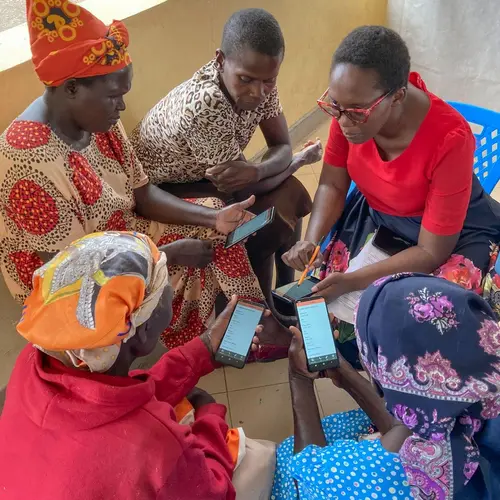
How Kenyan Businesses Can Make Their Websites More Inclusive
Businesses in Kenya can begin improving digital inclusion by auditing their existing websites. They can check whether text is readable, navigation is clear, forms are usable, images have appropriate alternative text, videos have captions where necessary, and pages work properly on mobile devices.
Businesses should also test their websites with different users. Customer feedback can reveal problems that internal teams may not notice. Analytics can show where users leave important pages, while accessibility tools can identify certain technical issues.
It is also useful to establish accessibility as an ongoing standard rather than a one-time project. New pages, blog posts, images, forms, and features should follow the same principles.
Working with experienced web designers can make this process easier because accessibility can be incorporated into the design, development, content, and testing workflow.
How to Choose Web Designers Who Value Inclusion
When choosing web designers, businesses should ask whether accessibility and usability are part of the design process. A provider should be able to discuss responsive design, keyboard navigation, readable typography, colour contrast, forms, performance, and testing.
Ask to see examples of completed websites and test them on different devices. Look at whether the navigation is clear and whether important information can be found without unnecessary effort.
Businesses should also ask how content will be handled. Accessibility depends partly on the content added after launch, so clients need a practical process for maintaining accessible pages.
The right designer does not need to promise perfect accessibility without testing. Instead, they should demonstrate a willingness to follow recognized accessibility principles, test their work, identify limitations, and improve the website over time.
Why Choose Ace Solution Africa
Ace Solution Africa approaches web design as a combination of visual communication, usability, performance, technical quality, and business strategy. Our goal is to help businesses create websites that are not only attractive but also practical for the people who use them.
For Kenyan businesses, this means considering mobile users, clear communication, local customer behaviour, SEO, performance, security, and convenient contact methods. Depending on the project, websites can also incorporate tools such as WhatsApp communication, online forms, e-commerce functionality, and payment integrations.
We believe a website should make it easier for the right audience to understand a business and take the next step. That requires thoughtful structure and user-centred design rather than visual presentation alone.
If you are looking for web designers to create or improve your business website, we can help you develop a digital experience built around accessibility, usability, performance, and your wider business goals.
Frequently Asked Questions
1. What is digital inclusion in web design?
Examples include descriptive alternative text, captions, keyboard-friendly navigation, readable typography, sufficient colour contrast, clear headings, accessible forms, and compatibility with assistive technologies.
2. Why are web designers important for accessibility?
Useful foundations include HTML, CSS, responsive design, user experience, content management systems, basic JavaScript, website performance, accessibility, SEO fundamentals, and client communication. The exact path depends on the learner’s career goals.
3. What accessibility features can a website include?
Yes. Web design can often be delivered remotely, allowing skilled Kenyan professionals to serve clients outside Kenya. Professional communication, quality, reliable delivery, and a strong portfolio are important.
4. Does accessible web design only benefit people with disabilities?
No. Clear navigation, readable text, captions, simple forms, strong contrast, and mobile-friendly layouts can improve the experience for a much wider audience.
5. Why is mobile-first design important in Kenya?
Many people access online services through smartphones. Mobile-first design helps ensure that essential content, navigation, forms, and calls to action remain usable on smaller screens and different connectivity conditions.
6. Can accessibility help SEO?
Some accessibility practices overlap with SEO-friendly practices, such as clear headings, descriptive links, logical navigation, and meaningful alternative text. Accessibility should primarily be implemented to serve users.
7. How can businesses test website accessibility?
Businesses can use accessibility evaluation tools, manual checks, keyboard testing, different devices, and user feedback. Professional accessibility reviews can provide more detailed assessment.
8. Do web designers need to understand accessibility standards?
They should understand recognized accessibility principles and incorporate them into planning, design, development, content, and testing. The level of expertise required depends on the complexity and audience of the website.
Conclusion:
Web designers are more than creators of attractive digital interfaces. They influence whether people can access information, understand content, navigate websites, communicate with businesses, and participate in the digital economy.
Digital inclusion requires attention to accessibility, usability, language, mobile performance, content clarity, forms, and the different circumstances in which people use the internet. For Kenyan businesses, these considerations can help create websites that serve broader audiences while improving the overall customer experience.
The most effective approach is to treat inclusion as part of good web design from the beginning. By working with user needs in mind and testing websites with different audiences, businesses can reduce unnecessary barriers and create more welcoming digital experiences.
If you are looking for web designers to build or improve an inclusive, responsive, and business-focused website, Ace Solution Africa can help.
Get Started Today:
Tel/WhatsApp: +254-721-585-355
Email: sales@acesolutionafrica.com

Table of contents
Our digital landscape are ever evolving and web development companies in Kenya are at the forefront of crafting online identities and driving business growth for many small and corporate businesses. Let’s delve into the journey of a leading web development company and explore how customers perceive their impact.
The Path to Excellence: A Glimpse into Top Web Development Companies in Kenya
Imagine a web development company that views each project as a blank canvas, ready to paint the digital masterpiece of a brand’s identity. Their journey begins with a deep understanding and genuine appreciation of the client’s aspirations, goals, and values. Armed with this comprehensive knowledge, they embark on the creative and design process, expertly crafting websites that resonate seamlessly with the essence of the business.
Customer-Centric Approach: The Heart of Success
Customers are the central focus of leading web development companies in Kenya. Recent research by reputable sources shows that 89% of customers highly value personalized online experiences. Recognizing this, these companies proactively customize solutions to match individual client needs.
Navigating User Experience: Transforming Perception
Recent surveys by the East African User Experience Society (EAUXS) reveal UX’s impact on customer perception. 72% said a seamless, intuitive website enhances brand perception. This emphasizes web development’s role in shaping digital brand image.
Elevating Brand Identity: A Harmonious Blend
The journey of top web development companies in Kenya combines design, functionality, and innovation. Meticulous coding, responsive design, and compelling visuals contribute to captivating and engaging websites. This testifies to the transformative power of professional websites in elevating brand identity and fueling online business growth.
Conclusion: The Impact of Top Web Development Companies in Kenya
In the ever-evolving world of technology, the journey of a top web development company is marked by continuous learning and relearning, adaptation, and a relentless commitment to excellence. As customers experience the seamless interaction with well-crafted websites, the perception of these companies as enablers of digital success grows stronger.
At Ace Solution, we are dedicated to crafting exceptional web experiences that resonate with your brand’s identity. Contact us today via Tel/WhatsApp: +254-721-585-355 or Email: sales@acesolutionafrica.com to embark on a journey of digital transformation. Let’s redefine your online presence together
Related Posts



LET'S BUILD SOMETHING GREAT
Ready for a better website?
Get a modern website designed around your business, goals, and budget.
Ready to Get Started?
Let's Build a Website That Works for Your Business
Whether you need a professional business website, an ecommerce store, a corporate website, or a complete digital growth strategy, our experienced team is ready to help you achieve your business goals online.
💼
View Our Recent Projects
Explore websites we've designed for businesses across different industries and discover what's possible.
View Projects📞
Book a Free Discovery Call
Speak with one of our website consultants, ask questions, and get expert guidance before making your decision.
Book a Free Call