


Table of contents
Introduction
Web designers play an increasingly important role in determining who can participate comfortably and effectively in the digital world. Their work goes far beyond choosing colours, arranging images, or creating attractive layouts. The decisions made during website design can influence whether people with different abilities, devices, languages, levels of digital confidence, and internet conditions can access information and complete important tasks online.
Digital inclusion means creating opportunities for people to participate in digital life rather than allowing technology to become another barrier. For businesses, this can mean making websites easier for customers to use. For public and community organizations, it can mean ensuring important information is available to a wider audience. In Kenya, where people access online services through different devices and connectivity conditions, inclusive web design is especially relevant.
A website that is beautiful but difficult to navigate, impossible to use with assistive technology, or too heavy for a mobile connection can exclude people unintentionally. Professional web designers therefore have a responsibility to think about the full range of users who may interact with a website.
This article examines how web designers can champion digital inclusion through accessibility, user-centred design, language considerations, mobile-first experiences, inclusive content, accessible forms, performance, and community-focused digital solutions. It also considers what Kenyan businesses can do to make their websites more welcoming and usable for diverse audiences.
Inclusive Web Design
Ready to Build a More Inclusive Website?
Create a website that is accessible, mobile-friendly, easy to use and designed around your customers.
Web Designers: Architects of Accessibility
Accessibility begins with the way a website is structured. Web designers can make decisions that help people with disabilities interact with digital content more effectively. These decisions can include meaningful heading structures, readable typography, sufficient colour contrast, descriptive links, alternative text for meaningful images, keyboard-friendly navigation, and clear form labels.
Accessibility is not simply a technical checklist. It is a way of considering different users during the design process. Someone may navigate with a screen reader, use a keyboard instead of a mouse, need larger text, have difficulty distinguishing certain colours, or require captions when consuming video content.
When accessibility is considered from the beginning, it becomes part of the design rather than an expensive correction added after a website has already been built. Web designers can work with developers and content creators to make accessibility part of the entire website workflow.
User-Centric Design for Everyone
User-centred design is one of the strongest foundations for digital inclusion. Instead of assuming that every visitor understands technology in the same way, designers consider what users are trying to accomplish and how easily they can accomplish it.
Navigation should be predictable. Important information should be easy to find. Buttons should clearly communicate their purpose. Forms should not ask for unnecessary information. Error messages should explain what went wrong and how to fix it.
These principles benefit everyone. A person with extensive technical knowledge can appreciate a clear interface, while someone who is less comfortable online can navigate with greater confidence. A busy customer using a phone can find information quickly without needing to understand the site’s underlying structure.
Inclusive design is therefore not about creating a separate website for certain users. It is about creating a better experience for the broadest practical audience.
Accessibility for People with Disabilities
People with disabilities can encounter barriers when websites are designed without accessibility in mind. A visual-only interface may create difficulties for screen-reader users. Poor colour contrast can make text difficult to read. Small clickable areas can create problems for people with motor difficulties. Videos without captions can exclude people who are deaf or hard of hearing.
Web designers can reduce these barriers through thoughtful choices. Images that convey information can have appropriate alternative text. Decorative images can be treated differently so they do not create unnecessary noise for assistive technology. Videos can include captions where appropriate. Interactive elements should have clear states and labels.
Designers should also test websites using accessibility tools and, where possible, real user feedback. Automated tools can identify some problems, but they cannot replace human evaluation and careful consideration of the user experience.
Why Digital Inclusion Matters in Kenya
Digital inclusion has particular importance in Kenya because online services increasingly influence how people find businesses, access information, communicate, learn, make payments, and interact with organizations.
A customer may access a business website using a smartphone rather than a desktop computer. Another user may have limited bandwidth. Someone else may rely on assistive technology. A visitor may be more comfortable with a language other than the one used throughout the website.
These differences should influence website planning. Kenyan businesses can improve inclusion by making essential information easy to access, optimizing pages for mobile devices, providing clear contact options, using straightforward language, and considering accessibility from the beginning.
Inclusive design can also strengthen trust. When people can understand and use a website without unnecessary obstacles, they are more likely to perceive the organization as professional and considerate.
Breaking Language Barriers
Language can become a major barrier to digital participation. Businesses serving international audiences may need multiple languages, while organizations operating in Kenya may need to consider audiences with different language preferences.
Web designers can support multilingual experiences by creating structures that allow content to be translated without breaking navigation, layouts, buttons, forms, or page structures. Text expansion should also be considered because translated content may take more or fewer words than the original.
Translation should be handled carefully. Automated translation can be useful in some situations, but important business, legal, healthcare, educational, or public information may require professional review.
Cultural context matters as well. Images, examples, symbols, colours, and communication styles can have different meanings across audiences. Inclusive design therefore involves understanding not only language but also the people who will use the website.
Mobile-First Design and Digital Inclusion
For many users, a smartphone is the primary gateway to the internet. This makes mobile-first design a key part of digital inclusion.
A mobile-friendly website should provide readable text, comfortable touch targets, simple navigation, appropriately sized images, and forms that are easy to complete on a small screen. Users should not have to zoom repeatedly or scroll horizontally to read important information.
Performance matters too. A website filled with large images, unnecessary animations, and heavy scripts may be difficult to use on slower connections. Optimizing images, reducing unnecessary resources, and prioritizing essential content can improve the experience.
Mobile-first design is therefore not merely a visual adjustment. It is a strategy for making digital information more practical and accessible to people using smartphones in different circumstances.

Designing for Different Levels of Digital Literacy
Not every website visitor has the same level of digital confidence. Some people are comfortable with complex interfaces, while others may hesitate when they encounter unfamiliar icons, terminology, or processes.
Web designers can support users with different levels of digital literacy by using familiar language, descriptive buttons, clear instructions, and predictable navigation. Instead of relying only on an icon, a button can include text explaining its purpose. Instead of assuming that a visitor knows what to do next, the page can provide a clear call to action.
This is particularly useful for service websites where the visitor may already be uncertain about the product or process. Clear explanations reduce cognitive effort and make it easier for users to make informed decisions.
Simplicity should not be confused with lack of sophistication. A sophisticated website can still be easy to use.
Inclusive Forms and Online Transactions
Forms are often one of the most important parts of a business website. They may be used for contact enquiries, quotation requests, bookings, applications, registrations, or purchases.
Poorly designed forms can exclude users or cause unnecessary frustration. Fields should have clear labels, required information should be obvious, and errors should be explained in understandable language. The form should also work with keyboard navigation and assistive technology where applicable.
For Kenyan businesses, forms may be combined with other communication options such as phone calls or WhatsApp. Offering more than one practical contact route can help customers choose the method that works best for them.
E-commerce and payment journeys require additional care. Customers should understand what they are paying for, what information is required, and what happens after a transaction. Clear interfaces reduce confusion and can improve trust.
Accessible Content and Clear Communication
Accessibility is not only about code and interface design. Content itself needs to be understandable. Long paragraphs, unexplained technical language, vague headings, and cluttered layouts can make information difficult to consume.
Web designers often work alongside writers and marketers, giving them an opportunity to encourage clearer content structures. Headings should describe what a section contains. Lists can make complex information easier to scan. Important information should not be hidden inside large blocks of text.
Images and videos should also be used thoughtfully. A meaningful image may require alternative text, while a decorative image may not need a detailed description. Videos can benefit from captions and, where appropriate, transcripts.
Clear content improves accessibility for many users, including people who are reading on small screens or who have limited time to find the information they need.
Performance Is Part of Inclusion
A slow website can become an accessibility problem even when the interface technically meets other accessibility requirements. If a page takes too long to load, users with limited connectivity may struggle to access its content.
Performance optimization can include compressing images, choosing appropriate image formats, reducing unnecessary scripts, using caching, optimizing code, and selecting suitable hosting. Designers should also consider whether every visual effect is necessary.
This is especially important for websites serving users across Kenya, where connectivity conditions can vary. A website that performs well under ideal conditions should also be evaluated under less-than-perfect conditions.
Fast, efficient websites benefit users and businesses alike. Visitors can access information more quickly, while businesses can potentially reduce abandonment and improve the overall experience.
Inclusive Design and Search Engine Optimization
Many practices associated with accessibility also support good search engine optimization. Clear headings help users understand content and help search engines interpret page structure. Descriptive link text provides context. Alternative text can help describe meaningful images. Logical navigation makes a website easier to understand.
This does not mean accessibility should be implemented only for SEO. Accessibility exists to serve people. However, the overlap demonstrates that good digital practices often reinforce one another.
Web designers can therefore work with SEO professionals and content teams to create websites that are useful to people and understandable to search engines. This approach is particularly valuable for Kenyan businesses that want to reach customers through organic search.
Web Designers and Inclusive Business Growth
Digital inclusion can also become a business opportunity. When a website is easier to use, more people can potentially access its products, services, information, and contact channels.
An e-commerce company can benefit from a clearer shopping journey. A hotel can make booking information easier to understand. A professional service company can simplify enquiry forms. A tourism business can make itineraries and travel information easier to navigate.
Inclusive design should therefore not be viewed solely as a social responsibility. It can contribute to better customer experiences and help businesses avoid unintentionally excluding potential customers.
The key is to design around real users rather than assumptions. Research, testing, analytics, customer feedback, and accessibility checks can all help businesses understand where visitors encounter problems.
Web Designers Supporting Communities and Nonprofits
Web designers can also use their skills to support nonprofit organizations, community initiatives, educational projects, advocacy groups, and other organizations working for social causes.
These organizations often need websites that communicate important information clearly, build trust, attract volunteers or donors, publish resources, and connect communities with services.
For a nonprofit, accessibility can be particularly important because its audience may include people seeking essential information or support. A confusing or inaccessible website can create an additional barrier for people who are already facing challenges.
Web professionals can contribute through pro bono work, discounted services, mentorship, training, or partnerships with community organizations. Even when a project is commercial, the principles of inclusive design can help ensure that digital services serve broader communities.
Web Designers Driving Social Change
Digital platforms can amplify voices that may otherwise struggle to reach large audiences. A well-designed website can help an organization publish educational resources, tell stories, organize campaigns, recruit volunteers, promote community initiatives, and connect people with useful services.
Web designers influence how those messages are presented. A clear structure can make important information easier to find. Accessible content can reach more people. Mobile optimization can help users access resources from their phones.
Social impact does not require every designer to work exclusively on nonprofit projects. The broader contribution comes from recognizing that design decisions affect who can participate and whose information can be accessed.
When designers take inclusion seriously, they help create a digital environment where technology can connect rather than exclude.
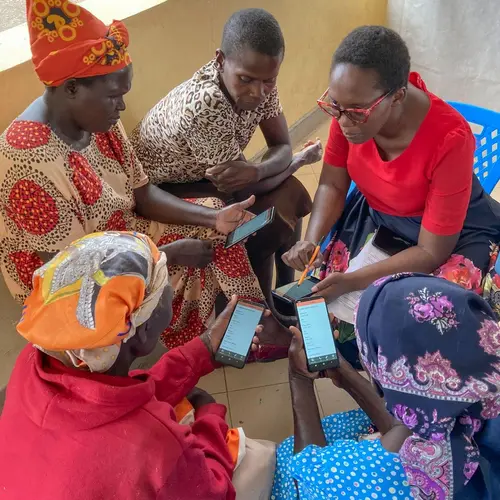
How Kenyan Businesses Can Make Their Websites More Inclusive
Businesses in Kenya can begin improving digital inclusion by auditing their existing websites. They can check whether text is readable, navigation is clear, forms are usable, images have appropriate alternative text, videos have captions where necessary, and pages work properly on mobile devices.
Businesses should also test their websites with different users. Customer feedback can reveal problems that internal teams may not notice. Analytics can show where users leave important pages, while accessibility tools can identify certain technical issues.
It is also useful to establish accessibility as an ongoing standard rather than a one-time project. New pages, blog posts, images, forms, and features should follow the same principles.
Working with experienced web designers can make this process easier because accessibility can be incorporated into the design, development, content, and testing workflow.
How to Choose Web Designers Who Value Inclusion
When choosing web designers, businesses should ask whether accessibility and usability are part of the design process. A provider should be able to discuss responsive design, keyboard navigation, readable typography, colour contrast, forms, performance, and testing.
Ask to see examples of completed websites and test them on different devices. Look at whether the navigation is clear and whether important information can be found without unnecessary effort.
Businesses should also ask how content will be handled. Accessibility depends partly on the content added after launch, so clients need a practical process for maintaining accessible pages.
The right designer does not need to promise perfect accessibility without testing. Instead, they should demonstrate a willingness to follow recognized accessibility principles, test their work, identify limitations, and improve the website over time.
Why Choose Ace Solution Africa
Ace Solution Africa approaches web design as a combination of visual communication, usability, performance, technical quality, and business strategy. Our goal is to help businesses create websites that are not only attractive but also practical for the people who use them.
For Kenyan businesses, this means considering mobile users, clear communication, local customer behaviour, SEO, performance, security, and convenient contact methods. Depending on the project, websites can also incorporate tools such as WhatsApp communication, online forms, e-commerce functionality, and payment integrations.
We believe a website should make it easier for the right audience to understand a business and take the next step. That requires thoughtful structure and user-centred design rather than visual presentation alone.
If you are looking for web designers to create or improve your business website, we can help you develop a digital experience built around accessibility, usability, performance, and your wider business goals.
Frequently Asked Questions
1. What is digital inclusion in web design?
Examples include descriptive alternative text, captions, keyboard-friendly navigation, readable typography, sufficient colour contrast, clear headings, accessible forms, and compatibility with assistive technologies.
2. Why are web designers important for accessibility?
Useful foundations include HTML, CSS, responsive design, user experience, content management systems, basic JavaScript, website performance, accessibility, SEO fundamentals, and client communication. The exact path depends on the learner’s career goals.
3. What accessibility features can a website include?
Yes. Web design can often be delivered remotely, allowing skilled Kenyan professionals to serve clients outside Kenya. Professional communication, quality, reliable delivery, and a strong portfolio are important.
4. Does accessible web design only benefit people with disabilities?
No. Clear navigation, readable text, captions, simple forms, strong contrast, and mobile-friendly layouts can improve the experience for a much wider audience.
5. Why is mobile-first design important in Kenya?
Many people access online services through smartphones. Mobile-first design helps ensure that essential content, navigation, forms, and calls to action remain usable on smaller screens and different connectivity conditions.
6. Can accessibility help SEO?
Some accessibility practices overlap with SEO-friendly practices, such as clear headings, descriptive links, logical navigation, and meaningful alternative text. Accessibility should primarily be implemented to serve users.
7. How can businesses test website accessibility?
Businesses can use accessibility evaluation tools, manual checks, keyboard testing, different devices, and user feedback. Professional accessibility reviews can provide more detailed assessment.
8. Do web designers need to understand accessibility standards?
They should understand recognized accessibility principles and incorporate them into planning, design, development, content, and testing. The level of expertise required depends on the complexity and audience of the website.
Conclusion:
Web designers are more than creators of attractive digital interfaces. They influence whether people can access information, understand content, navigate websites, communicate with businesses, and participate in the digital economy.
Digital inclusion requires attention to accessibility, usability, language, mobile performance, content clarity, forms, and the different circumstances in which people use the internet. For Kenyan businesses, these considerations can help create websites that serve broader audiences while improving the overall customer experience.
The most effective approach is to treat inclusion as part of good web design from the beginning. By working with user needs in mind and testing websites with different audiences, businesses can reduce unnecessary barriers and create more welcoming digital experiences.
If you are looking for web designers to build or improve an inclusive, responsive, and business-focused website, Ace Solution Africa can help.
Get Started Today:
Tel/WhatsApp: +254-721-585-355
Email: sales@acesolutionafrica.com
Related Posts



LET'S BUILD SOMETHING GREAT
Ready for a better website?
Get a modern website designed around your business, goals, and budget.
Ready to Get Started?
Let's Build a Website That Works for Your Business
Whether you need a professional business website, an ecommerce store, a corporate website, or a complete digital growth strategy, our experienced team is ready to help you achieve your business goals online.
💼
View Our Recent Projects
Explore websites we've designed for businesses across different industries and discover what's possible.
View Projects📞
Book a Free Discovery Call
Speak with one of our website consultants, ask questions, and get expert guidance before making your decision.
Book a Free Call